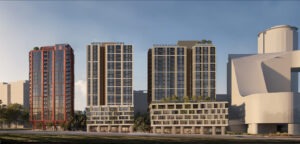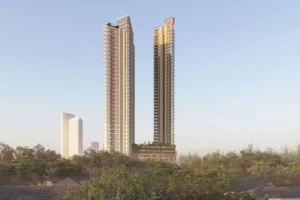
Parramatta’s southern CBD edge is set for significant change, with a $198 million, 37-storey mixed-use tower proposed at 33–43 Marion Street under the NSW Government’s Housing Delivery Authority (HDA) pathway.
Now on public exhibition, the proposal combines a concurrent rezoning with a State Significant Development application, seeking a substantial increase to planning controls. As a result, it stands among the more ambitious uplift proposals in the precinct, particularly given its location at the transition between low-rise and high-density areas.
The project’s scale, its proximity to heritage-listed homes, and its inclusion of affordable housing place it at the centre of ongoing discussions about density, design, and planning flexibility in Parramatta.
Tower details and proposed uplift
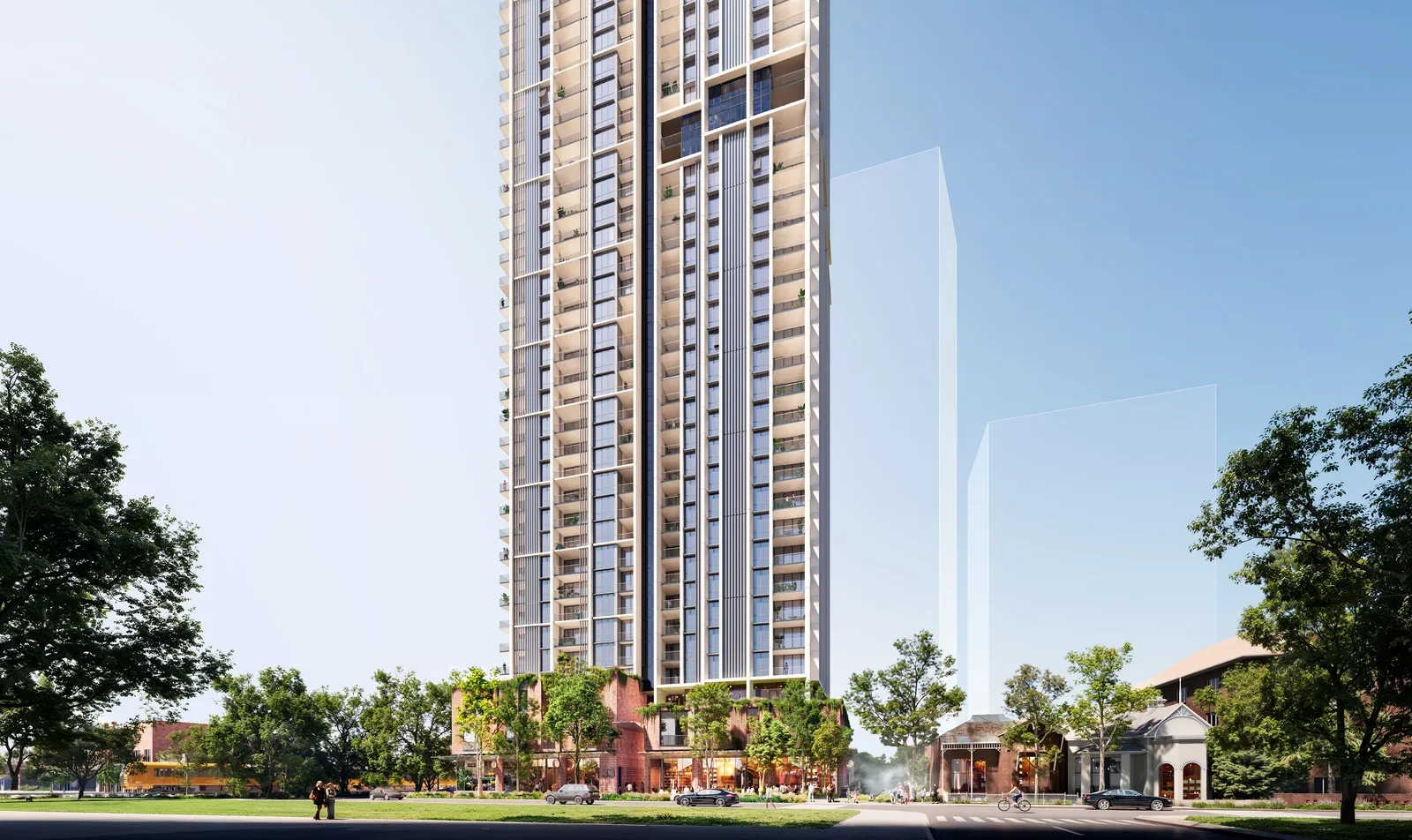
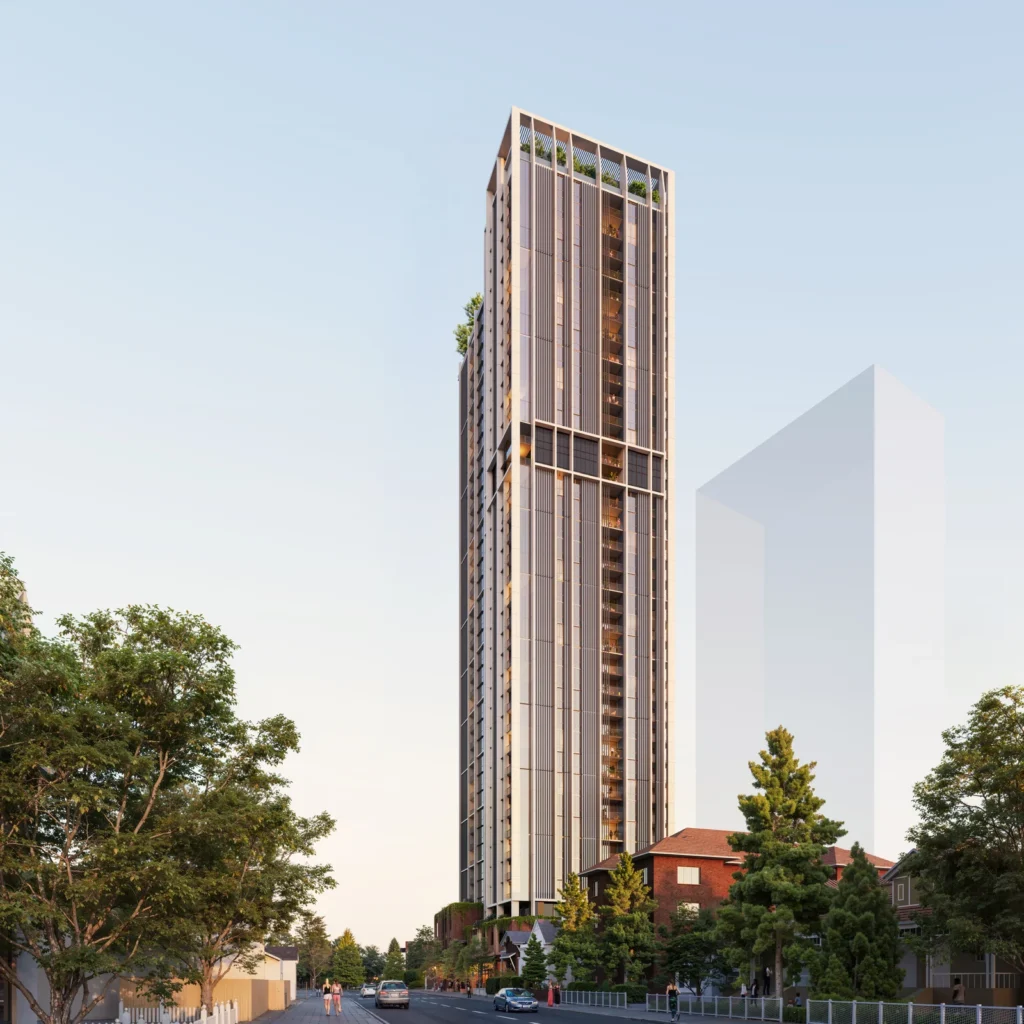
The application seeks consent for a 37-storey shop top housing development delivering 296 apartments, including 29 affordable units to be managed by a community housing provider for 15 years. In addition, the 2,376sq m site would accommodate five basement parking levels accessed from Station Lane, ground-floor commercial uses, and communal open space across podium and rooftop levels.
A key feature of the proposal is the uplift in planning controls. The scheme seeks a floor space ratio of 11.33:1 and a maximum height of 128.05 metres, compared to existing controls of 6:1 FSR and 80 metres. This increase moves beyond typical variations in the area and reflects the flexibility enabled through the HDA pathway.
The scale of uplift is also closely tied to the site’s proximity to Harris Park Station, which is positioned as the primary justification for increased density.
Planning pathway shaped by multiple iterations
The Marion Street site has undergone several planning iterations in recent years, reflecting broader shifts in housing policy and delivery mechanisms. Earlier concepts explored build-to-rent and co-living models, while a 2024 planning proposal seeking a higher 15:1 FSR did not proceed following council feedback.
A subsequent attempt to utilise affordable housing incentives under the Housing SEPP was also abandoned. The current proposal instead progresses through the HDA pathway, allowing for a concurrent rezoning alongside the development application and enabling a different approach to uplift.
The site was declared State Significant Development in March 2025, with SEARs issued shortly after. In June 2025, the requirement for a design competition was waived, with the Government Architect NSW endorsing an alternative design excellence strategy subject to review by the State Design Review Panel.
This pathway has enabled the proponent to pursue a higher-density outcome while maintaining a streamlined approval process.
Design response and neighbourhood context
The proposed tower sits adjacent to two heritage-listed single-storey dwellings at 29 and 31 Marion Street, placing it within a highly sensitive interface between contrasting built forms. While the site itself is not heritage-listed, its immediate context includes low-scale development that differs significantly from the proposed height.
Heritage advice submitted with the application concludes there would be no direct impact on the adjoining items or conservation area. However, the scale difference between the proposed 128-metre tower and neighbouring dwellings is likely to remain a central consideration during assessment.
The design incorporates elements intended to respond to the site’s context, including references to traditional shopfront character and the retention of some industrial façades. It also introduces ground-level activation, a through-site pedestrian link, and landscaped communal areas.
The project has been reviewed twice by the State Design Review Panel, with feedback informing the current scheme.
Affordable housing and planning trade-offs
The proposal includes 29 affordable housing units, representing 10 per cent of total gross floor area, to be managed by a community housing provider for a minimum of 15 years. This provision is framed as a response to housing stress in the local area, where a significant proportion of households face rental and mortgage pressure.
However, the affordable housing component is not delivered under the Housing SEPP and does not attract bonus height or FSR. Instead, the uplift is achieved through the concurrent rezoning process, separating the planning incentive from the affordable housing mechanism.
As a result, attention is likely to focus on how the scale of additional development capacity aligns with the level of public benefit delivered through the affordable housing component.
Project Team
- Developer: The Trustee of CN Marion Unit Trust
- Planning: Think Planners
- Architect: Fuse Architect
- Heritage: GBA
- Landscape: Black Beetle
- Affordable Housing Provider: Bridge Housing
- ESD: IGS Consultants
- Accessibility: Vista Access Architects
- Wind: Windtech
- Contamination: Sullivan Environmental Sciences
- Geotechnical: ei Australia Community
- Engagement: Community Insights Consulting
For more information, search the application number (SSD-81770462) on the Department of Planning’s website.