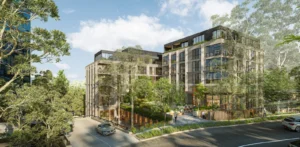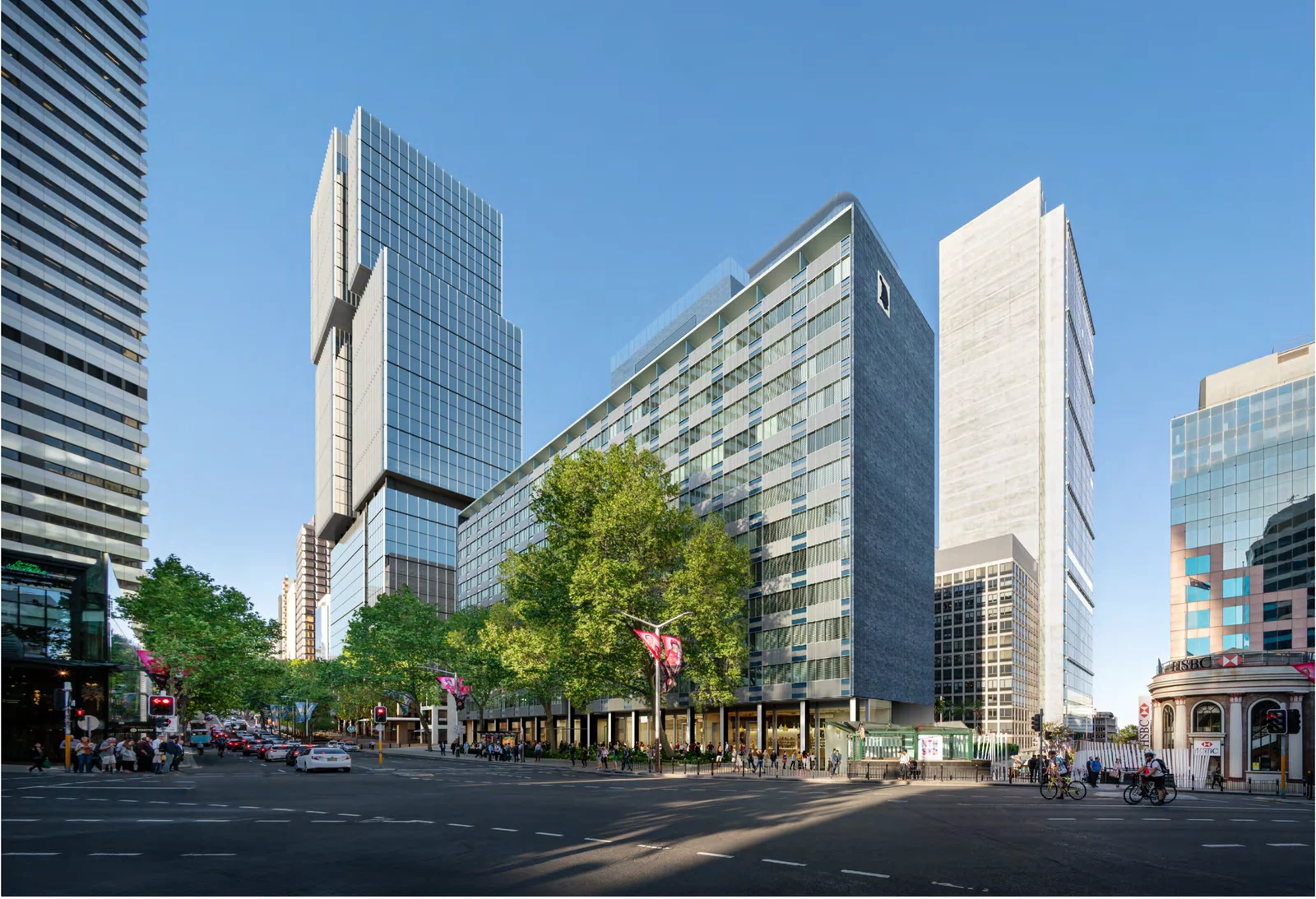
Investa has won approval to convert North Sydney’s heritage-listed MLC Building into a university campus, in a $354.2 million project that will add a new 22-storey Denison Street wing and ground-floor retail. The scheme will deliver 48,276 square metres of gross floor area, 72 car spaces and 282 bicycle spaces, while the planning material forecasts 307 construction jobs and 870 operational jobs.
The approval marks a major turning point for one of North Sydney’s best-known postwar buildings. The MLC Building has been vacant since March 2022, and the site has been the subject of several redevelopment pathways as Investa sought a viable long-term future for the asset. This scheme now clears a path for adaptive reuse of the landmark complex, while keeping its most significant heritage component on Miller Street.
A new use for a vacant landmark
The proposal will retain and restore the Miller Street wing, demolish the Denison Street wing and central core, and replace them with a new university-focused addition. Ground-floor retail and student hub space will sit below education uses, while the basement will be reconfigured to include parking, end-of-trip facilities, servicing and refurbished squash courts. The works also include a relocated driveway on Denison Street and upgrades to the public domain around the site.
That redevelopment logic is closely tied to the building’s condition and layout. The planning documents describe the Denison Street wing as too small to support contemporary commercial or education uses, with an existing floorplate of 733 square metres. Investa explored options to retain the wing and build above it. However, those alternatives were found to be structurally unfeasible, leading the team to pursue full replacement with a larger and more flexible floorplate.
The site also has major operational constraints. The existing building has deteriorated over time, with ageing materials, underperforming façades and a ground-floor entry that is vulnerable to flooding. Because of the steep fall across the site and the low point at the Miller Street entrance, water has flowed down the entry steps and through the lobby during major rain events. The application argues that any viable reuse must therefore address both heritage conservation and flood resilience at the same time.
What approval allows on the site
The approved scheme combines restoration with substantial new building work. On Miller Street, Investa will conserve the retained wing, restore the curtain wall and tiled façade, and lift the ground floor above the 1 per cent AEP flood level. That move also allows the creation of an almost double-height entry lobby, which will become the main arrival point for the future campus. In addition, the project will retain and refurbish the auditorium, while restoring significant internal features where possible.
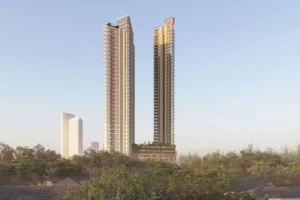
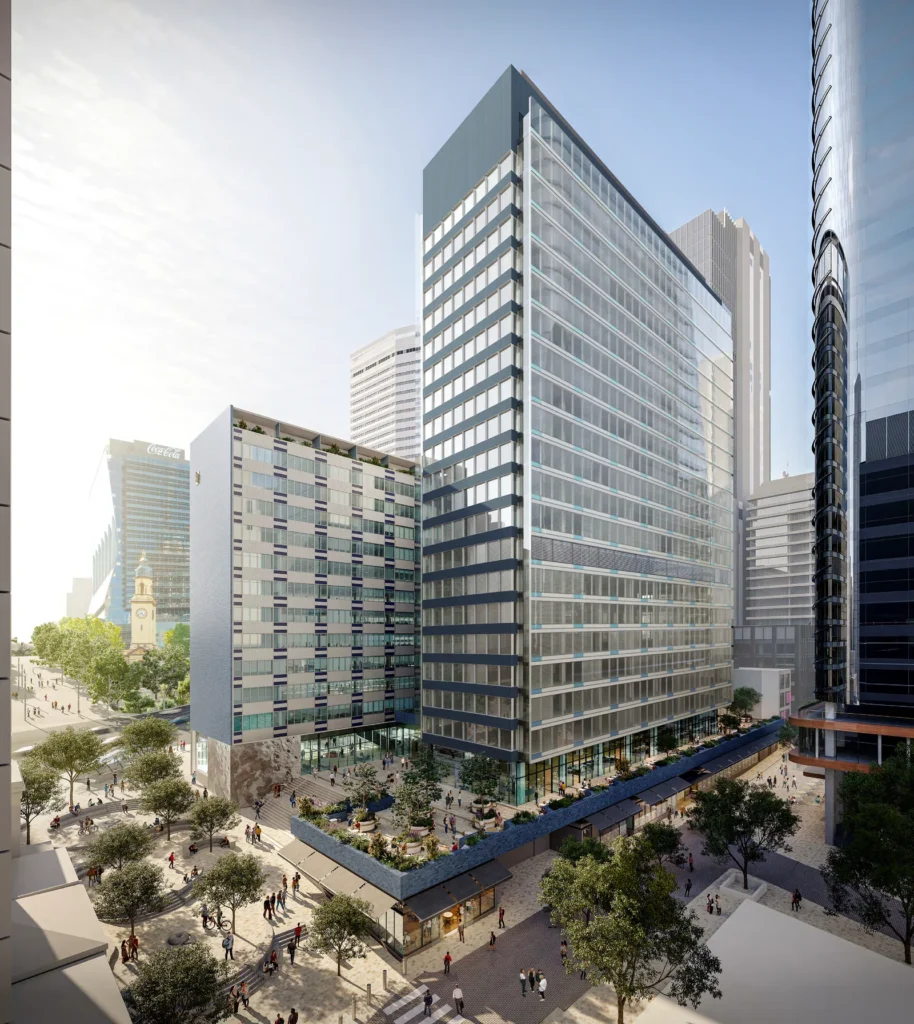
On Denison Street, the new 22-storey wing will deliver ground-level retail and university hub uses, with education spaces above. A new central core will connect the retained and new parts of the complex and provide lifts, services, bathrooms and circulation space. The larger floorplates are designed to support contemporary campus use and improve long-term flexibility.
The approval also covers extensive external works. Investa will remove the pavilion on the north-western corner of Miller Street, rework the forecourt and expand public open space along the western edge of the building. The planning material says those changes are intended to improve the presentation of the heritage façade, remove visual clutter and create a stronger pedestrian setting beside Victoria Cross station and Brett Whiteley Plaza.
Why this project matters in North Sydney
For the market, the project is notable because it shifts a high-profile CBD asset away from a pure office future. Investa had also lodged a separate commercial office proposal for the site in December 2024, reflecting uncertainty around leasing and the need to reactivate the vacant building. The university scheme offers a different path. It uses education as the anchor use for a large adaptive reuse project in one of Sydney’s most transit-rich commercial precincts.
The heritage story is equally important. The MLC Building was added to the State Heritage Register in June 2021, removed after court proceedings in July 2022, and relisted by the NSW Government in December 2023. A Conservation Management Plan prepared during that relisting process identified a new building on the Denison Street wing as a potential way to help fund conservation of the broader complex. The current scheme emerged from that process and from negotiations between the owner, council and heritage authorities.
That background helps explain why the approval carries broader significance than a standard change of use. It is effectively a resolution to the long-running question of how to reuse a state-listed modernist landmark that no longer meets current market expectations in its existing form. Rather than seeking full demolition, the approved scheme keeps the Miller Street wing as the defining heritage element and uses the new Denison Street volume to support the economics of restoration.
Public domain, flood response and street activation
The public realm works are a substantial part of the approved package. The scheme will widen the Miller Street forecourt setback to 15.4 metres, deliver new landscaping and create a larger plaza-style setting at the building’s western frontage. It also includes upgrades around Brett Whiteley Plaza and a Connecting with Country response that incorporates a whale engraving in the ground plane and other landscape gestures informed by consultation with Traditional Custodians and Aboriginal stakeholders.
Street activation has also shaped the design. Existing loading activity on Denison Street sits beside the metro entrance and works against council’s long-term pedestrianisation goals for the street. The approved scheme moves that loading function into the basement and relocates vehicle access, which should produce a more active and less service-dominated street edge over time. Parking will fall from 129 spaces to 72, while bicycle parking rises to 282 spaces with end-of-trip facilities.
Flood mitigation is another core design move. The building’s sunken Miller Street entry has been a known hazard, and the approved design responds by raising the finished floor level and forecourt. That change is central to the new arrival sequence, although it also influenced the final proportions of the ground floor and required further design scrutiny through the heritage process.
Stakeholder views and heritage balance
Consultation on the project involved North Sydney Council, the Heritage Council, the State Design Review Panel, neighbouring owners and leaseholders, and the public. The main issues raised included view impacts, traffic, construction disruption and the extent of intervention in the heritage fabric. Even so, the planning material records general support from the Heritage Council for the adaptive reuse direction, alongside detailed comments on façade treatment, proportions and retention of significant spaces.
That balance between conservation and change remains the central issue in the project. The approved works involve major intervention, including demolition of the core and Denison Street wing and replacement of deteriorated façade elements on the Miller Street wing. However, the planning case is that those changes are necessary to make the building occupiable, compliant and financially sustainable, while preserving the most significant public-facing heritage elements.
Project Team
- Developer: Investa
- Planning: Beam Planning
- Architect: FJC Studio
- Landscape architect: 360 Degrees
- Heritage: Curio
- Transport: SCT Consulting
- Sustainability: Inhabit
- Civil and flood engineering: Enstruct
- Wind and noise: RWDI
- Arboriculture: Green Spaces
- Contamination and geotechnical: Douglas Partners
- Waste: Foresight Environmental
- CPTED: NDY
- Social impact: ATX Consulting
- Aboriginal cultural heritage: Curio
- Hazardous materials: JBS+G
- BCA: BM+G
- Accessibility: Morris Goding Access Consulting
- Fire engineering: Jensen Hughes
- Infrastructure and utilities: ARUP
- Aeronautical impact: AvLAW
- Cost planning / EDC: WTP
For more information, search the application number (SSD-83956216) on the NSW Department of Planning, Housing and Infrastructure’s website.