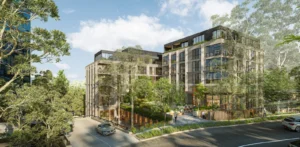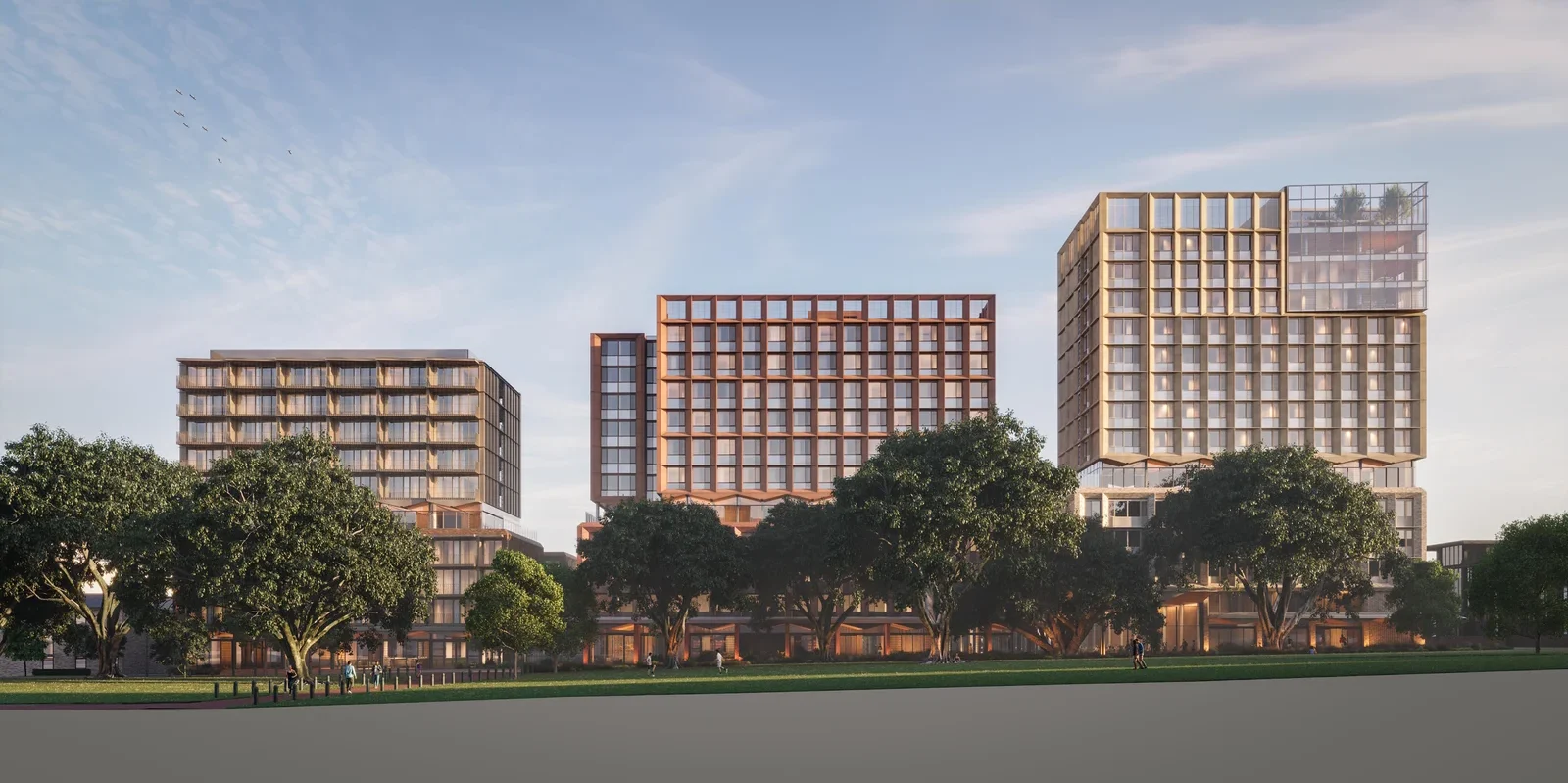
NSW’s plan for a major new student accommodation precinct at 39 Barker Street, Kensington, marks one of the largest on-campus housing proposals in the Randwick Health and Education Precinct.
The University of New South Wales has lodged a State Significant Development application seeking approval for 732 student beds across three new buildings. In addition, the proposal includes 30 non-student units for Deans and short-stay guests. The scheme would replace the existing Barker Street Apartments, which the university describes as at the end of their functional life.
The Minister for Planning declared the project State Significant Development on 13 May 2025 following a recommendation from the NSW Housing Delivery Authority. As a result, the Department of Planning, Housing and Infrastructure will assess the application.
The 8,905sqm site sits on the southern edge of the Kensington campus, directly opposite low and medium density housing in Kingsford. Because of its position along Barker Street and proximity to light rail and bus services, the site has long functioned as a transition between campus and residential neighbourhoods.
However, the new proposal significantly increases both height and yield compared to the existing three-to-five storey buildings.
Three buildings, five colleges, no parking
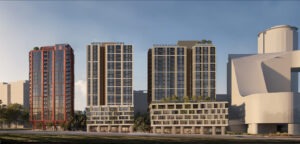
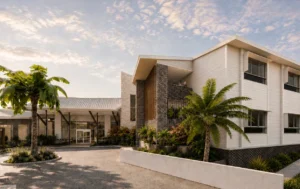
UNSW seeks consent to demolish all existing structures and construct three buildings known as Block A, B and C. Together they would contain five separate colleges and 732 student beds, along with 30 non-student units.
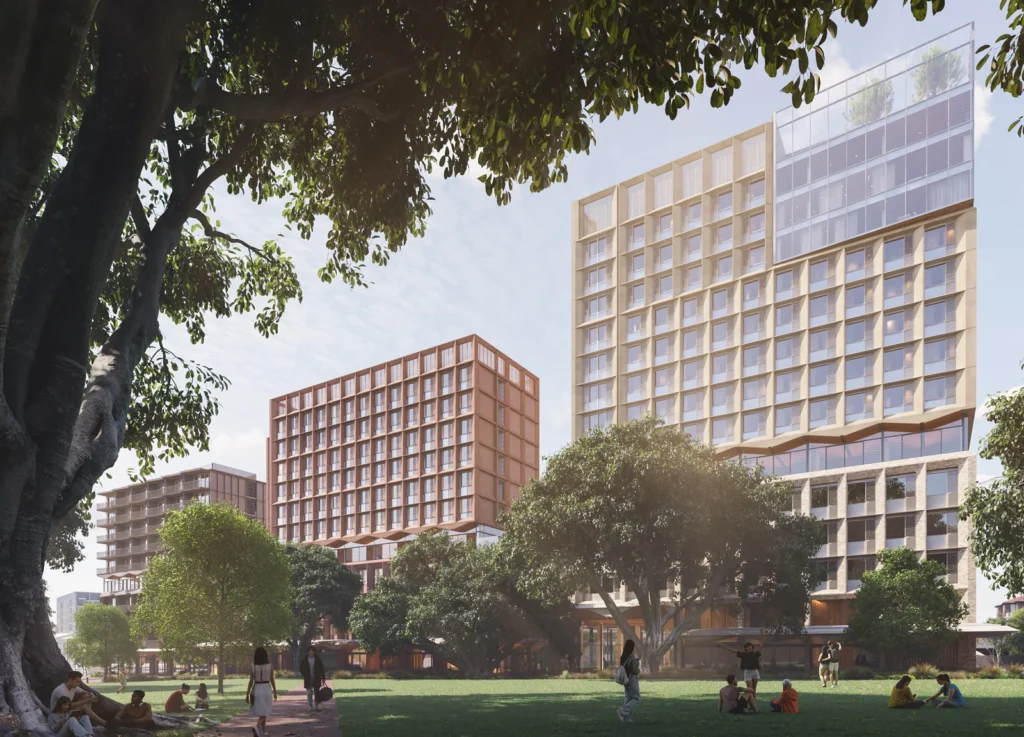
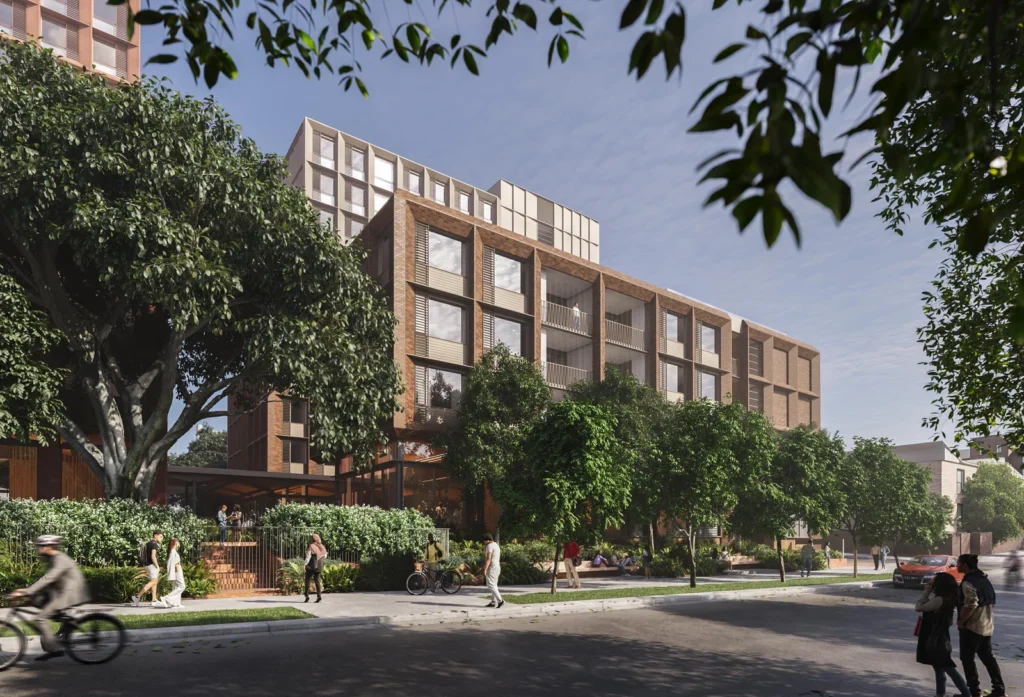
Block A would comprise a four-storey podium with a 10-storey tower above. Block B would include a four-storey podium and eight-storey tower, while Block C would rise from a four-storey podium to seven storeys above.
The development would deliver almost 4,000sqm of internal communal space and more than 6,300sqm of external communal areas. Meanwhile, Southern Drive would be partially reconfigured to accommodate new driveway access.
Notably, the proposal does not include resident parking. Instead, the university relies on proximity to the UNSW Anzac Parade Light Rail station, located approximately 500 metres away, as well as multiple bus routes along Barker Street and Anzac Parade .
This aligns with the Future Transport 2056 strategy, which encourages car-free and sustainable transport options in well-serviced metropolitan precincts.
Construction is anticipated to begin in January 2027 and conclude by December 2029, subject to approval. The timing is designed to align with the 2030 academic year.
Strategic alignment and federal migration settings
UNSW frames the redevelopment as both a campus renewal project and a housing supply response.
The Environmental Impact Statement cites a forecast shortfall of 4,857 purpose-built student beds in 2025. Therefore, the university argues the project is critical to relieve pressure on both on-campus accommodation and the surrounding private rental market.
According to the EIS, the number of international students in Australia increased from 182,137 in June 2004 to 566,006 in June 2024. As a result, demand for dedicated student housing has intensified over the past two decades.
The project also responds to anticipated changes to federal migration policy. The EIS notes that enrolments may be capped unless universities demonstrate adequate student accommodation capacity.
At a strategic level, the site sits within the Randwick Health and Education Precinct. State, regional and local planning documents consistently identify the precinct as a priority location for higher education growth and supporting housing supply.
Because the campus already benefits from significant infrastructure investment, including light rail and proximity to the Prince of Wales Hospital, the university argues additional housing here represents efficient land use.
Height variation and local interface
A key assessment issue will centre on height.
The proposal seeks a variation to the maximum building height control under the Randwick Local Environmental Plan 2013. UNSW has lodged a Clause 4.6 Variation Request to justify the exceedance.
The university argues that the additional height supports improved design outcomes, campus integration and bed yield. However, assessment will need to consider impacts on streetscape character, overshadowing and the interface with adjacent residential properties.
The site slopes from RL 29.5m in the north-east to RL 25.8m in the south-west. In addition, part of the south-western portion is subject to flooding during major storm events.
Several significant fig trees line the site’s perimeter. Importantly, the design retains and protects a prominent Ficus macrophylla on the southern boundary.
Meanwhile, cumulative impacts are under review. Other State Significant Developments are underway across the campus, including upgrades to the Barker Street car park and new teaching and aquatic facilities.
Affordability, inclusion and public interest
Affordability and inclusivity underpin the project’s stated objectives.
UNSW argues the development will provide a range of accommodation types at different price points. Because the model combines accommodation and meal fees across different colleges, the university contends it offers lower-cost options than private co-living or off-campus rentals.
The EIS also emphasises a commitment to Connecting with Country principles. Community consultation with First Nations stakeholders informed elements of the design, and the project seeks to create a culturally safe environment for Indigenous students.
However, stakeholders raised concerns during early engagement. These included tree impacts, public domain design, affordability, inclusivity, construction impacts and amenity issues.
The EIS concludes that identified impacts can be mitigated through appropriate conditions and management plans. Ultimately, the Minister or delegate must determine whether the public benefits of increased student housing outweigh built form and amenity impacts.
Project Team
- Developer: University of New South Wales (UNSW)
- Planning: Beam Planning
- Architecture: Bates Smart
- Landscape: Aspect Studios
- Aboriginal cultural heritage: Urbis
- ESD: Atelier Ten
- Traffic: JMT Consulting
- Arboriculture: Canopy Consulting
- Construction management: WT Partnership
- Community engagement: Colliers Urban Planning
- Engineering and technical studies: Arup; Douglas Partners; Steve Watson & Partners; Avlaw Aviation; Evolve Ecology
For more information, search the application number (SSD-84220206) on the Department of Planning, Housing and Infrastructure’s website.