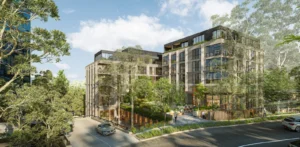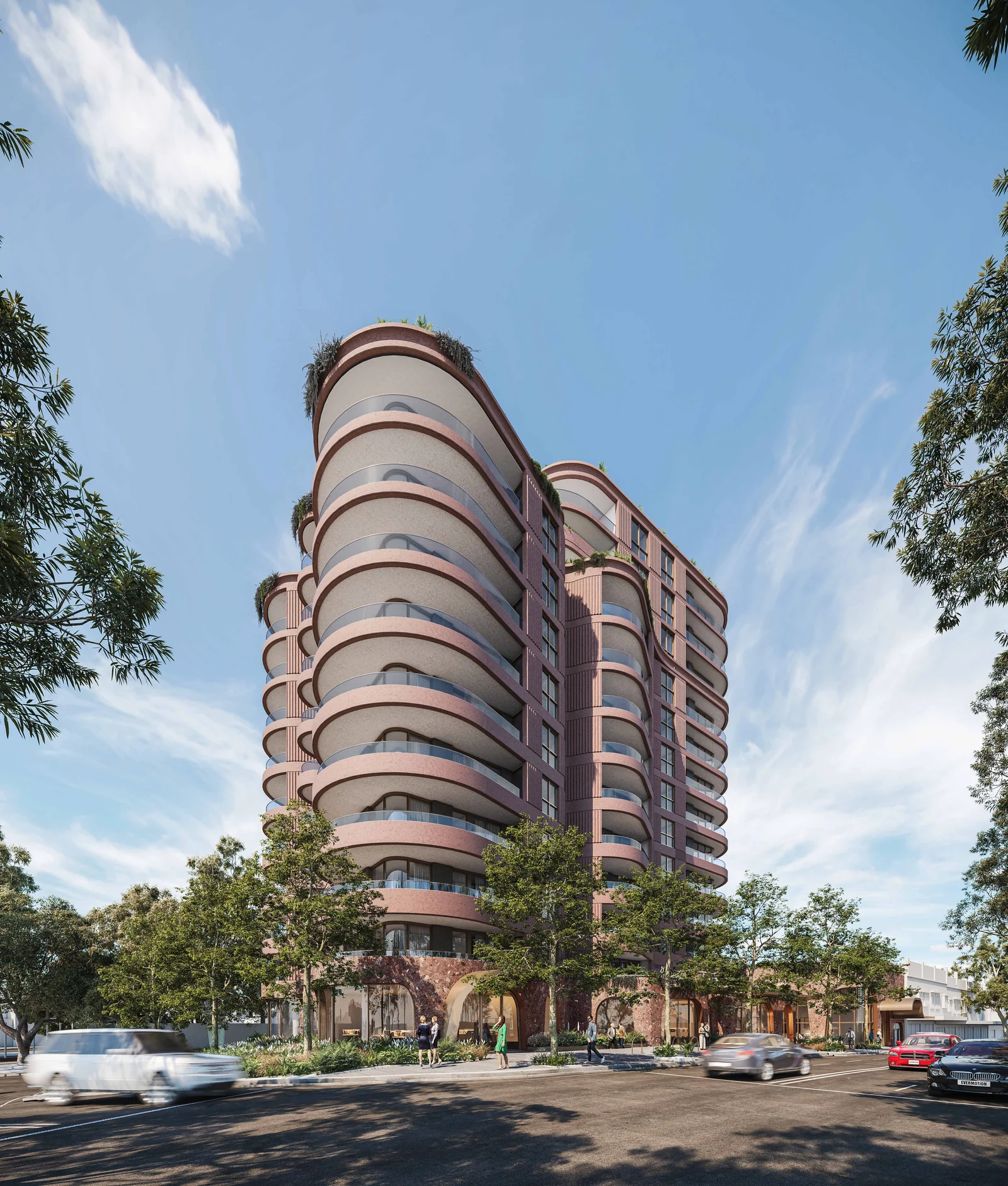
A major mixed-use development at the western gateway of Bondi Junction is set to deliver 85 new apartments—including 17 affordable dwellings—alongside ground-floor retail and significant public domain improvements. The $79.97 million project has now been approved by the NSW Department of Planning, Housing and Infrastructure, under delegation from the Minister for Planning and Public Spaces.
Project Overview
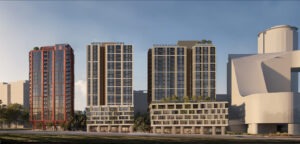
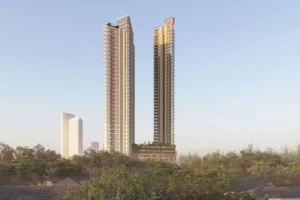
The approved scheme at 194-214 Oxford Street and 2 Nelson Street comprises two residential towers above a retail podium, reaching a maximum height of 54 metres (17 storeys). The development will provide 11,288m² of gross floor area, including 467m² of retail, 10,792m² of residential space, and 1,709m² dedicated to affordable housing. The apartment mix includes 2 one-bedroom, 35 two-bedroom, and 48 three-bedroom units. Four basement levels will accommodate 138 car spaces and 45 motorcycle spaces, with access from Osmund Lane. Communal open space and new landscaping are also included.
Strategic and Policy Context
The project responds directly to state and national housing priorities, including the National Housing Accord and the NSW Housing Strategy, which call for increased supply of well-located and affordable dwellings. The site’s proximity to Bondi Junction’s transport hub and retail centre aligns with the objectives of the Greater Sydney Region Plan and the Eastern City District Plan. The proposal leverages recent provisions in the State Environmental Planning Policy (Housing) 2021, which incentivise infill affordable housing in accessible locations.
Planning History
A site-specific planning proposal was lodged in 2015, resulting in increased height and floor space ratio controls and a requirement for a design excellence competition. SJB Architects’ scheme won the competition in 2020. The parent development consent (DA-400/2021) approved a 10-storey shop-top housing project, later amended to consolidate basement parking and refine ground floor layouts. A planning agreement was executed in 2023, securing a $6.3 million contribution and delivery of a public plaza and through-site link. The current SSD application sought approval for additional levels and affordable housing, building on the established planning framework.
Design and Architectural Intent
The design, led by SJB Architects, retains the principles established under the parent consent while introducing additional height and density to accommodate affordable housing. The scheme features a stepped tower form to minimise visual and overshadowing impacts on Centennial Park and neighbouring properties. Material selection and façade articulation aim to integrate the development with the local streetscape and heritage context. The podium activates Oxford Street with retail, while new public spaces and pedestrian links enhance site permeability and community benefit.
Community and Stakeholder Response
Community engagement during the EIS phase and public exhibition generated 125 submissions, with 118 objections, five in support, and two neutral. Key concerns included building height, overshadowing, traffic, parking, heritage impacts, and perceived overdevelopment. Waverley Council formally objected, citing similar issues. State agencies and the Centennial Park Trust focused on overshadowing and heritage protection, particularly regarding the park and a heritage-listed Norfolk Island Pine. The applicant engaged with stakeholders and amended the design to address overshadowing and access concerns, and updated technical documentation in response to feedback.
Impacts and Assessment Findings
The Department’s assessment found that, while Building B exceeds the local height limit by 9.8 metres, the variation is justified on planning grounds. The stepped form and tower placement were assessed as minimising visual and overshadowing impacts, with no additional shadow cast on Centennial Park within protected times and areas. Traffic modelling indicated that the projected vehicle movements would not materially affect local road performance, and parking provision meets Housing SEPP requirements. Heritage impacts were deemed acceptable, with the loss of the Norfolk Island Pine (removed after lightning damage and with Council approval) offset by replacement planting. The scheme was found to comply with key design criteria in the Apartment Design Guide and Waverley DCP, except for height, which was varied under clause 4.6 of the LEP.
Determination Outcome and Reasons
The application was approved with conditions by the Department under Ministerial delegation. The assessment report identifies the project’s contribution to housing supply—including affordable dwellings—in a highly accessible location as a decisive benefit. The Department concluded that impacts on amenity, heritage, and traffic can be appropriately managed through design and consent conditions. Key conditions require implementation of a Green Travel Plan, construction and operational traffic management, provision of car share and EV charging, and compliance with updated landscaping and public domain plans. The approval is contingent on resolving any inconsistencies with earlier consents through modification processes.
Project Team
- Developer: Westgate BJ Pty Ltd
- Planning: Urbis
- Architecture: SJB Architects
- ESD: Vipac
For more information, search the application number (SSD-77175998) on the NSW Department of Planning, Housing and Infrastructure’s website.