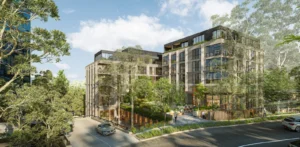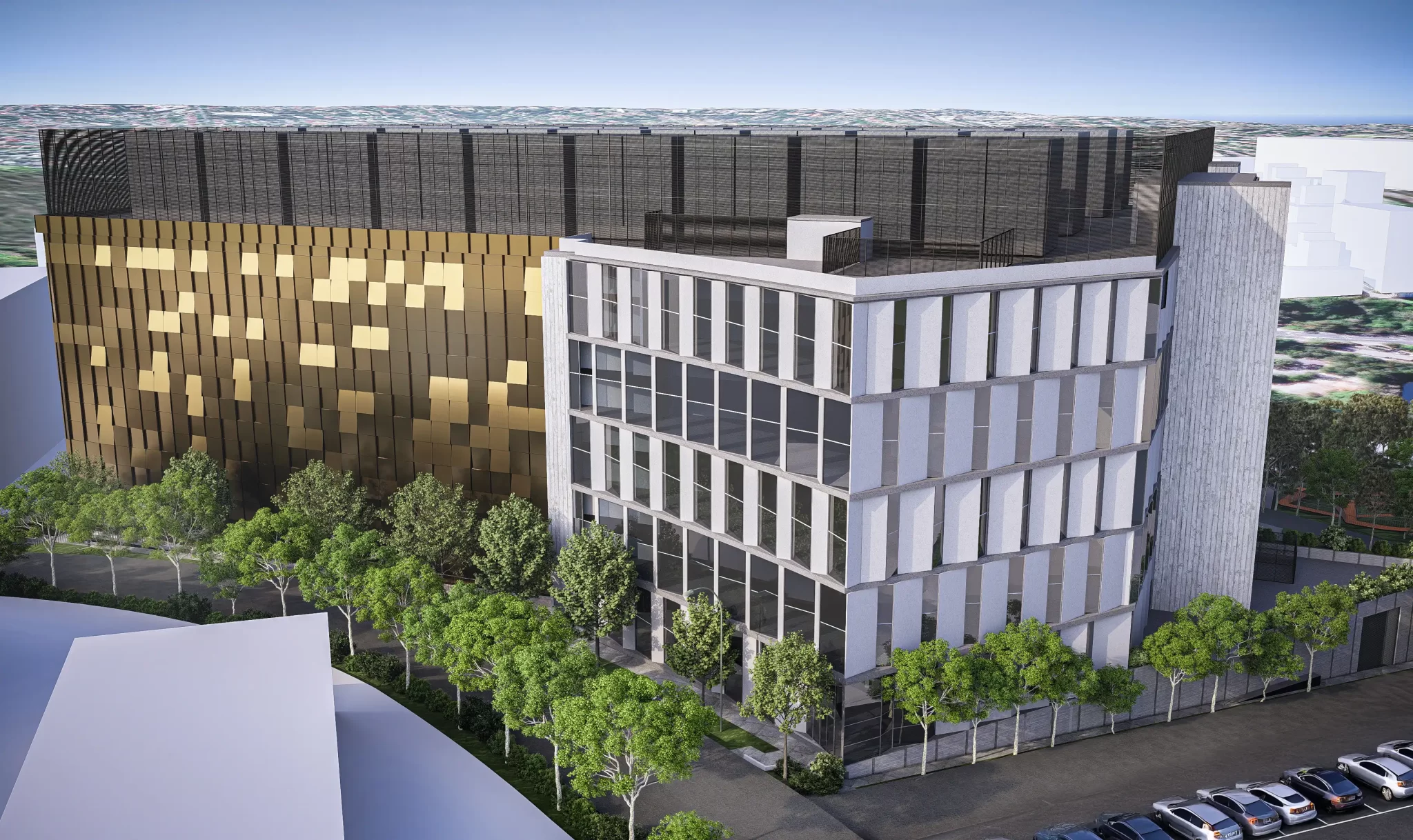
A $1.58 billion data centre development is now on public exhibition for 6-8 Julius Avenue, North Ryde. ISPT Pty Ltd proposes the project, aiming to deliver one of Sydney’s most significant digital infrastructure builds to date.
If approved, the six-storey data centre will include 12 data halls, an ancillary five-storey office building, and an enclosed generator gantry. It will provide an IT load of 115.2 megawatts and a peak power draw of 169 megawatts. A basement level will offer 54 car spaces. The proposal also includes new access roads, landscaping, and provision for a future Ausgrid 132kV switching station.
Site and Strategic Context
This project responds to the growing demand for secure, high-capacity data infrastructure in Sydney, especially in strategic employment precincts like Macquarie Park. Digital technologies continue to expand across finance, healthcare, education, government, and cloud computing, which drives the need for scalable and resilient data hosting facilities. As a result, data centres are now viewed as essential infrastructure. Placing them within major employment and innovation zones aligns with planning policy.
The development site covers 2.86ha within the Macquarie Park precinct, approximately 15km northwest of the Sydney CBD. Zoned E3 Productivity Support under the Ryde LEP 2014, the land is currently vacant and partially cleared from past commercial approvals granted in 2005.
The site adjoins Lane Cove National Park to the east and south-east, while commercial uses border the remaining frontages. The area has recently attracted large-format commercial and infrastructure projects, including several data centres in North Ryde and Lane Cove West.
This proposed use complies with local zoning and supports broader strategic planning objectives under the Greater Sydney Region Plan and North District Plan. Both plans promote the clustering of high-tech infrastructure and employment uses in Macquarie Park.
Development Summary
The Julius Avenue Data Centre will deliver approximately 36,648 square metres of gross floor area. The six-storey structure will accommodate twelve data halls, with mechanical services and infrastructure on each level. A five-storey office building will front Julius Avenue, and a six-storey gantry at the rear will contain emergency generators.
The site design also includes two pedestrian links to nearby bushland, a new internal road, and landscaping with offset planting to reinforce the bushland buffer. The proposal reserves land for a future 132kV Ausgrid switching station, supporting grid integration.
The development complies with the 1:1 floor space ratio permitted for the site. However, it exceeds the incentive-based 45-metre height limit, reaching 50.93 metres. ISPT has submitted a Clause 4.6 variation request, citing site topography and strategic benefit as justification.
Planning Pathway and Justifications
The proposal qualifies as State Significant Development under the Planning Systems SEPP 2021, as it exceeds the 15MW power threshold for data centres. The NSW Department of Planning, Housing and Infrastructure is currently exhibiting the application.
A previous commercial scheme on the site remains valid, although only excavation work was completed. This new proposal replaces that older vision with infrastructure more aligned to present-day needs.
Environmental and Urban Design Considerations
The site lies adjacent to Lane Cove River and bushland areas, which required thorough ecological and visual impact assessments. Although some vegetation removal is planned, the proposal includes offset planting and biodiversity credits to address impacts.
Designers placed the tallest elements away from sensitive edges to reduce visibility. Visual assessments show limited impact on nearby residential areas, which sit over 300 metres away. Consultants assessed noise, air quality, bushfire, and flooding risks, recommending mitigation measures where needed.
Sustainability measures will reduce energy and water use. These include on-site energy metering, renewable energy integration, lower peak power demand, and water efficiency features. A NABERS Embodied Emissions Materials Report supports the project’s environmental credentials.
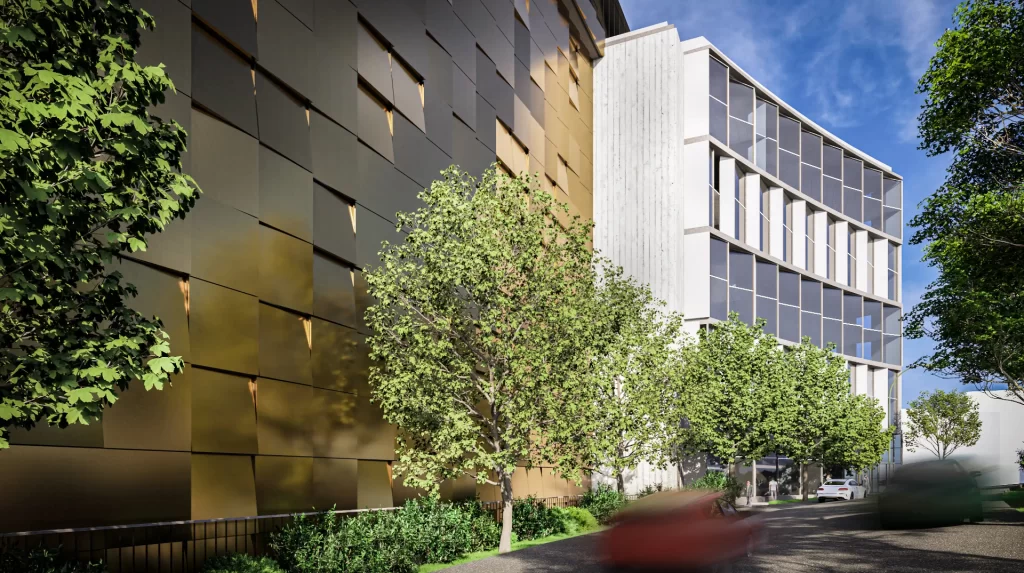
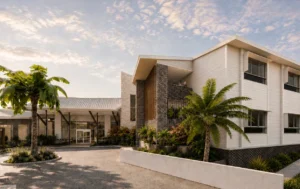
Artist impression by Greenbox Architecture
Community and Agency Engagement
The proponent consulted a wide range of stakeholders. These included City of Ryde, Lane Cove and Willoughby councils, Aboriginal groups, Ausgrid, and local community associations. Over 600 properties received formal notification.
Key concerns centred on vegetation loss, generator noise, bushfire risk, and building bulk. ISPT addressed these with design revisions, acoustic treatments, ecological offsets, and enhanced landscaping.
In response to community feedback, the developer included pedestrian connections and landscaping that better integrate the site’s bushland edge with the public domain.
Construction and Operational Impacts
Construction is expected to create more than 3,400 direct jobs, with the broader workforce impact approaching 5,000 across supply chains. Once operational, the data centre will employ approximately 50 people.
ISPT will manage traffic through a Construction Traffic Management Plan and upgrades to nearby roads. A Green Travel Plan will support staff using sustainable transport options.
Emergency power will come from diesel generators located in an acoustic enclosure. ISPT has modelled generator testing to comply with EPA noise regulations.
Project Team
- Developer: ISPT Pty Ltd
- Planner: Willowtree Planning
- Architect: Greenbox Architecture
- ESD & Noise: Arup
- Landscape: Arcadia
- Traffic: PTC
- Air Quality: Northstar
- Heritage & Aboriginal Heritage: GML Heritage
- Civil, Flood & Infrastructure: TTW
- Geotech & Groundwater: Douglas Partners
- Cost & Emissions: Rider Levett Bucknall
- Waste: WasteCheck
- Backup Power: IGS
For more information, search the application number (SSD-80018208) on the NSW Department of Planning, Housing and Infrastructure’s website.