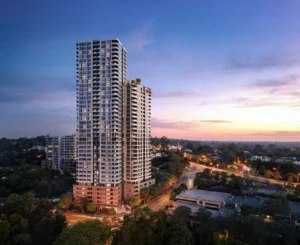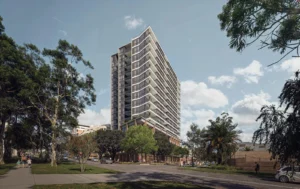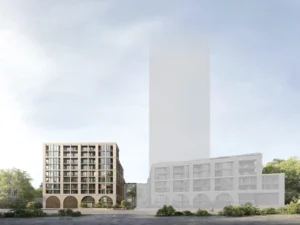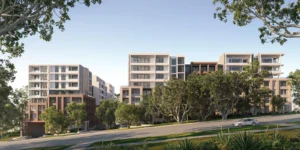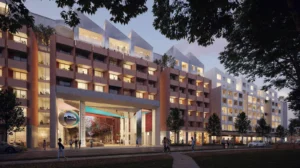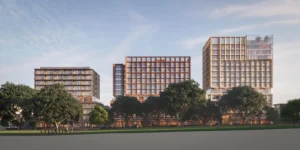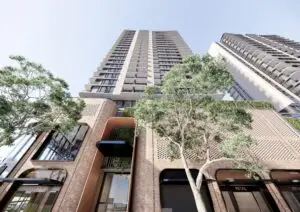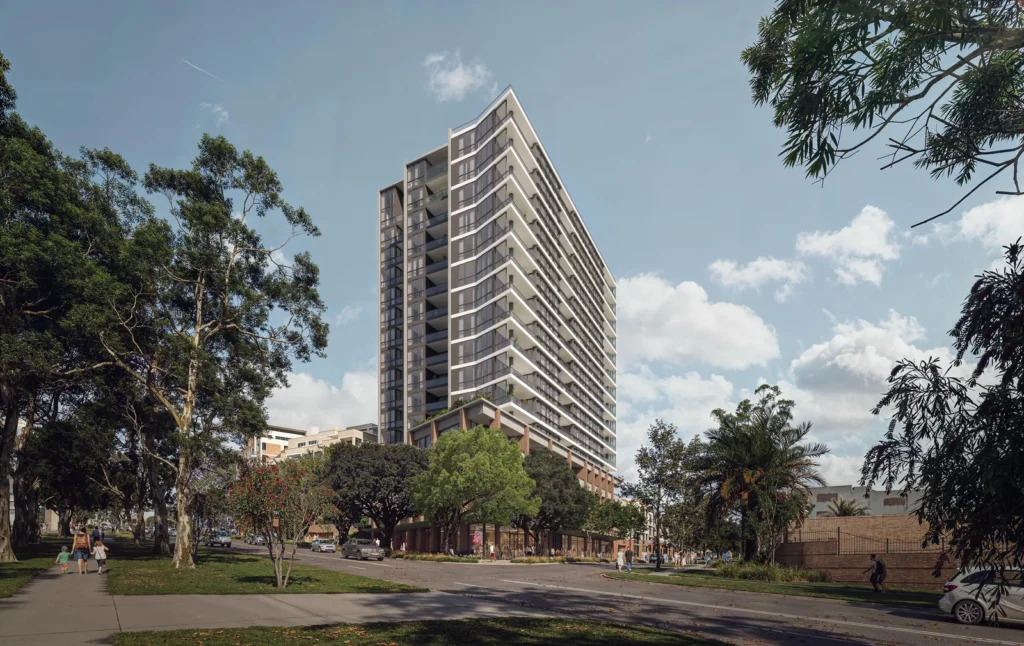
A proposal for a 17-storey mixed-use development in Miranda is now on public exhibition through the NSW Department of Planning, Housing and Infrastructure. The plan combines a residential tower with a new regional headquarters for The Salvation Army.
The application relates to 2–6 Willock Avenue and 23 Kiora Road. It seeks approval for a building significantly larger than current planning controls allow, including increases in both height and density.
The scheme stands out for two reasons. First, it seeks to lift the height control from 25 metres to 60 metres. Second, it proposes a floor space ratio increase from 2:1 to 5.5:1.
At the same time, the project combines residential development with community services and affordable housing. As a result, the proposal raises key planning questions about scale, urban fit, and public benefit.
During assessment, regulators will examine whether the uplift aligns with the evolving Miranda strategic centre. In addition, the review will consider overshadowing, amenity impacts, and the claimed social benefits of the development.
Details of the Proposal
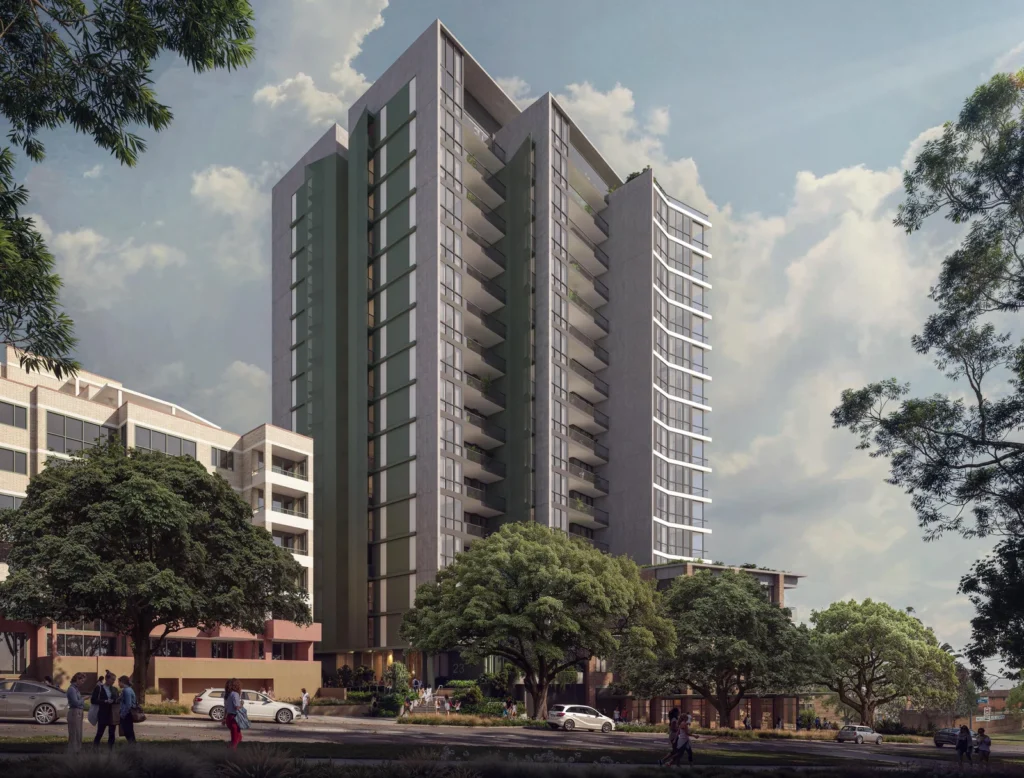
The application is now before the NSW Department of Planning, Housing and Infrastructure for assessment. It proposes demolition of the existing buildings and construction of a 17-storey mixed-use building.
The development would deliver 116 residential apartments. These include 13 one-bedroom units, 65 two-bedroom units, and 38 three-bedroom units.
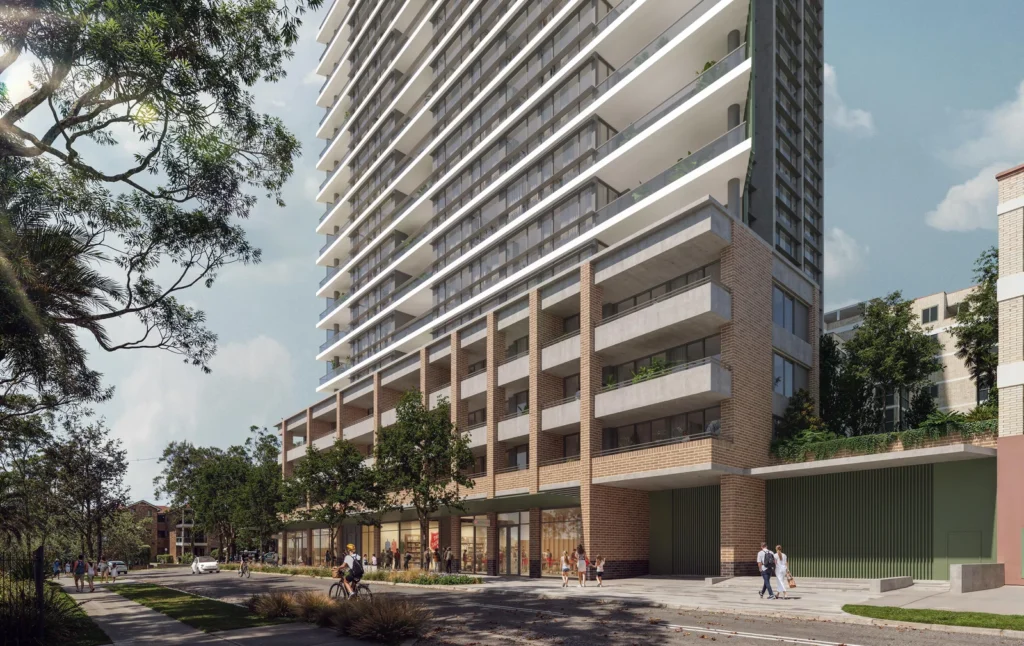
At ground level, the proposal includes a 1,500 square metre Salvation Army community facility. This space would function as the organisation’s regional headquarters and service hub.
Meanwhile, the design includes communal open space areas for residents. The building would also contain three basement levels for car parking, storage, and building services.
Five apartments are nominated as affordable housing dwellings. These units represent a portion of the additional floor space created by the proposed planning uplift. The development site has an area of 2,447 square metres.
Salvation Army’s Local Legacy
The land has a long association with The Salvation Army, whose regional headquarters currently occupy the site.
In December 2023, the proponent lodged a Planning Proposal (PP-2023-2891) with Sutherland Shire Council. The proposal sought the same increases in height and floor space ratio now requested through the State Significant Development pathway.
However, the planning process began earlier. Pre-lodgement discussions with Council started in February 2022. During those meetings, Council identified several key issues.
In particular, Council emphasised the need to demonstrate clear public benefits. It also requested detailed analysis of overshadowing, amenity impacts, and urban design outcomes.
The project later entered the State Significant Development pathway. In February 2025, a Ministerial Order declared the proposal State Significant Development following a recommendation from the Housing Delivery Authority. Shortly afterward, the Department issued Secretary’s Environmental Assessment Requirements for the project.
Height, Density, and Urban Fit
The most significant planning issue is the scale of the proposed uplift.
The current planning controls allow a maximum height of 25 metres and a floor space ratio of 2:1. However, the application seeks a height of 60 metres and an FSR of 5.5:1.
According to the proponent, the increase reflects the evolving role of Miranda as a strategic centre. The proposal also references the draft Miranda Place Plan, which identifies opportunities for increased density near key activity areas.
The application argues that the site occupies a gateway location within the centre. As a result, the design adopts a perimeter block form with a tower element above.
An independent urban design peer review accompanied the earlier Planning Proposal. That review supported the general design strategy and tower placement.
However, it also highlighted the importance of managing privacy and overshadowing. Consequently, these issues will remain central during the assessment process. The application states that the building would not create unreasonable overshadowing of nearby apartments or the neighbouring school.
Community Space and Affordable Units
The proposal places significant emphasis on the community component of the development.
At ground level, the project includes a 1,500 square metre Salvation Army community facility. The organisation intends to use the space for regional operations and support services.
According to the application, the facility could generate approximately $4 million per year in social value. This estimate relates to the range of community services delivered from the site.
The development also proposes five affordable housing apartments. These dwellings represent around five per cent of the uplifted residential floor space, excluding the community facility.
The proponent presents these elements as key public benefits of the scheme. In addition, the proposal argues that the project would help address a shortfall in community floor space identified by Council.
However, planners will assess how these benefits compare with the scale of the requested development uplift. As a result, the balance between private residential development and public outcomes will be closely examined.
Overshadowing and Amenity
Overshadowing and residential amenity remain important considerations for the proposal.
Because the development significantly exceeds current height controls, the building’s potential impacts require careful analysis. In particular, planners will examine solar access, privacy, and visual impacts.
The design includes setbacks and massing changes intended to reduce overshadowing. These measures aim to protect sunlight to nearby apartments and the adjacent school.
Technical studies accompany the application to demonstrate compliance with planning guidelines. However, Council’s earlier pre-lodgement feedback highlighted the need for robust evidence on these issues.
Consequently, the technical reports will undergo detailed review during the assessment process.
Traffic and Access Impacts
The project would introduce both residential and community uses to the site. Therefore, traffic generation and parking demand form another key part of the assessment.
The design includes three basement levels that accommodate parking, loading areas, and building services.
In addition, the application highlights the site’s proximity to public transport and major retail facilities. Miranda railway station is located approximately 400 metres from the site, while Westfield Miranda sits around 160 metres away.
Because of this proximity, the proposal frames the development as a transit-oriented project. However, regulators will still review the adequacy of parking provision, site access, and potential impacts on the surrounding road network.
Government agencies will also assess the proposal as part of the exhibition and referral process.
Public Exhibition and Next Steps
The application is now on public exhibition through the NSW Department of Planning, Housing and Infrastructure.
During this stage, members of the public can review the proposal and lodge submissions. At the same time, the Department will refer the application to relevant government agencies for technical review.
Following exhibition, the Department will assess submissions, agency advice, and supporting studies before making a determination under the State Significant Development process.
Project Team
- Developer: Formus Miranda Pty Ltd
- Urban Planning: Colliers Urban Planning (author of the planning documentation)
- Architecture: Turner Architects
- Urban Design Peer Review: Matthew Pullinger Architect
- Traffic Engineering: McLaren Traffic Engineering
- Landscape Architecture: Land+Form
- Heritage: Artefact Heritage and Environment
- Social and Economic Impact: ATX Consulting
- Community Engagement: Left Field Communications
For more information, search the application number (SSD-80438964) on the NSW Department of Planning, Housing and Infrastructure’s website.