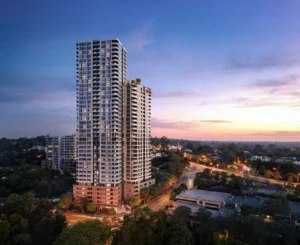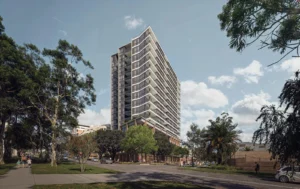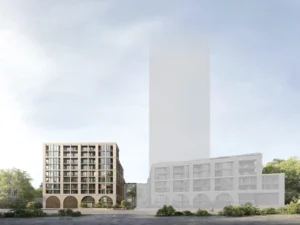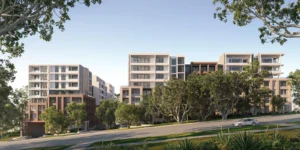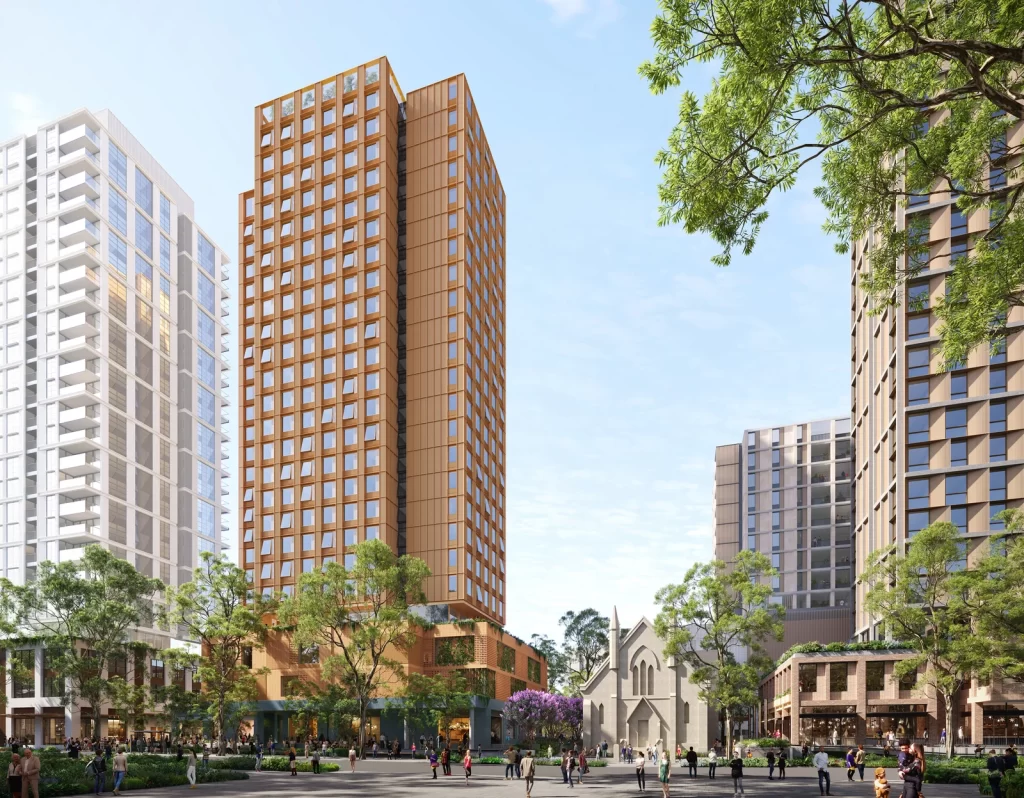
A major application for a 26-storey co-living tower in Waterloo is now on public exhibition, marking the next stage of development above the new metro station. The detailed proposal forms the Central Precinct of the Waterloo Metro Quarter — a key inner-city renewal site in the NSW Government’s transit-led housing strategy.
The application (SSD-79307746) outlines plans for one of Sydney’s largest co-living buildings. The proposal is part of the Waterloo Metro Quarter Over Station Development, a priority site enabled by the Sydney Metro City & Southwest project.
Co-Living Model Anchors Mixed-Use Development
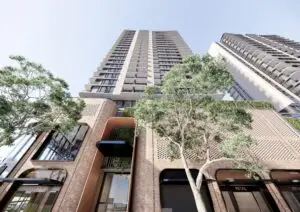
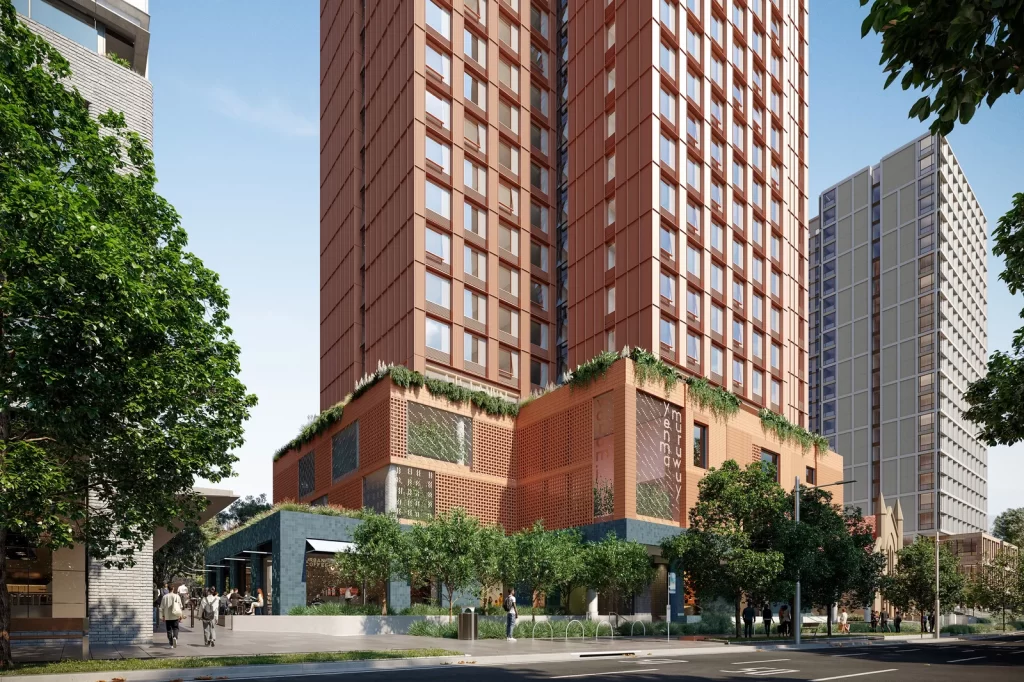
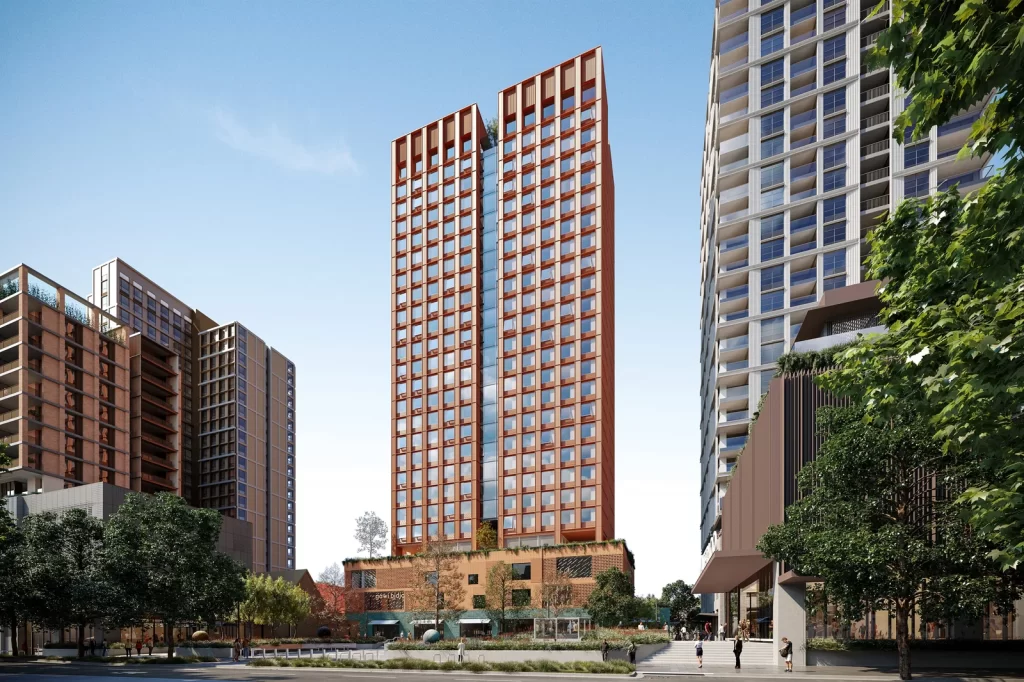
The tower includes around 500 co-living rooms arranged across 20 accommodation levels. Shared spaces are provided on each floor, with larger communal indoor and outdoor amenities on levels 3 and 24.
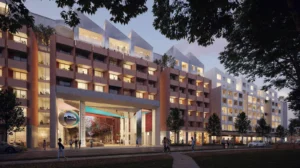
A three-storey podium anchors the tower to the street. The podium includes retail spaces at ground level, a childcare centre across two upper floors, and lobby access for both the residential and basement levels. Public domain upgrades include a pedestrian link through the site and landscaping works. The development also nominates building signage zones for future tenant use.
Basement Parking and Access Strategy
The Central Precinct will use a shared basement already approved under previous applications. Access is provided via Cope Street and the new Church Square shared zone. The basement will accommodate 127 car spaces, 10 motorcycle spaces, and 74 bicycle spaces. These include spaces for residents, retail staff, and visitors.
End-of-trip facilities are proposed for both commercial and retail users. These include showers, lockers, and bicycle storage areas. Five courier and service bays are provided in the basement and will be managed using an online booking system. These bays will also support short-term childcare drop-off.
The EIS states that the parking strategy complies with previous concept approvals and local planning controls, while prioritising active and public transport access.
Strategic Transport and Policy Alignment
The site is directly above Waterloo Metro Station, which began operations in August 2024. Redfern and Green Square train stations are within walking distance, and the area is served by a dense bus network.
Traffic modelling included in the EIS projects minimal additional impacts on the external road network through to 2035. The application includes a Construction Traffic Management Plan and Freight and Servicing Management Plan. While the number of service bays falls below City of Sydney DCP benchmarks, the EIS argues the provision is appropriate for the building’s scale, citing TfNSW Freight Forecaster methodology.
Parking rates remain below maximum permissible levels, supporting mode shift away from car use in line with State and local policies.
Planning History and Statutory Framework
The proposal is consistent with earlier approvals under the State Significant Development pathway. The site forms part of a staged planning process for the Waterloo Metro Quarter.
In 2017, the Waterloo Station was approved under a Critical State Significant Infrastructure application. In 2019, a Concept SSD (SSD 9393) established key building envelopes, land uses and development controls. That concept was amended in 2021 (SSD 10441) to accommodate revised podium massing and the co-living model proposed in this application.
This current SSD replaces an earlier detailed approval for the Central Precinct. Submissions on the proposal are invited during the public exhibition period, after which the Department of Planning will complete its assessment.
Urban Design and Co-Living Intent
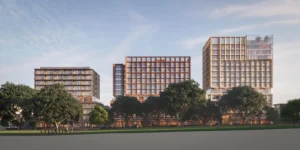
The tower’s form responds to the urban context and integrates with the existing metro station. The massing and setbacks aim to maintain pedestrian access and visual permeability. The podium activates the street with retail and community uses, including the childcare centre and through-site pedestrian link.
The design incorporates end-of-trip facilities, bicycle parking and landscaping intended to support active travel. According to the EIS, the co-living model introduces a new housing type that supports flexibility and affordability for inner-urban residents.
The proposal forms part of the precinct’s broader transition to a dense, mixed-use environment connected to high-capacity public transport.
Project Team
- Developer: WL Developer Pty Ltd
- Planning Consultant: Urbis
- Transport and Parking Consultant: ptc.
For more information, search the application number (SSD-79307746) on the NSW Department of Planning’s website.