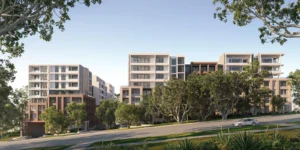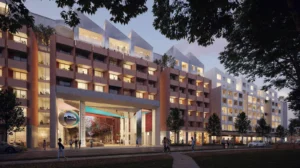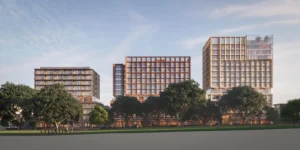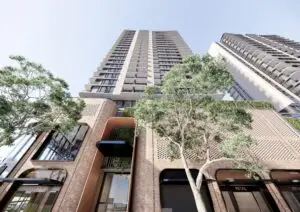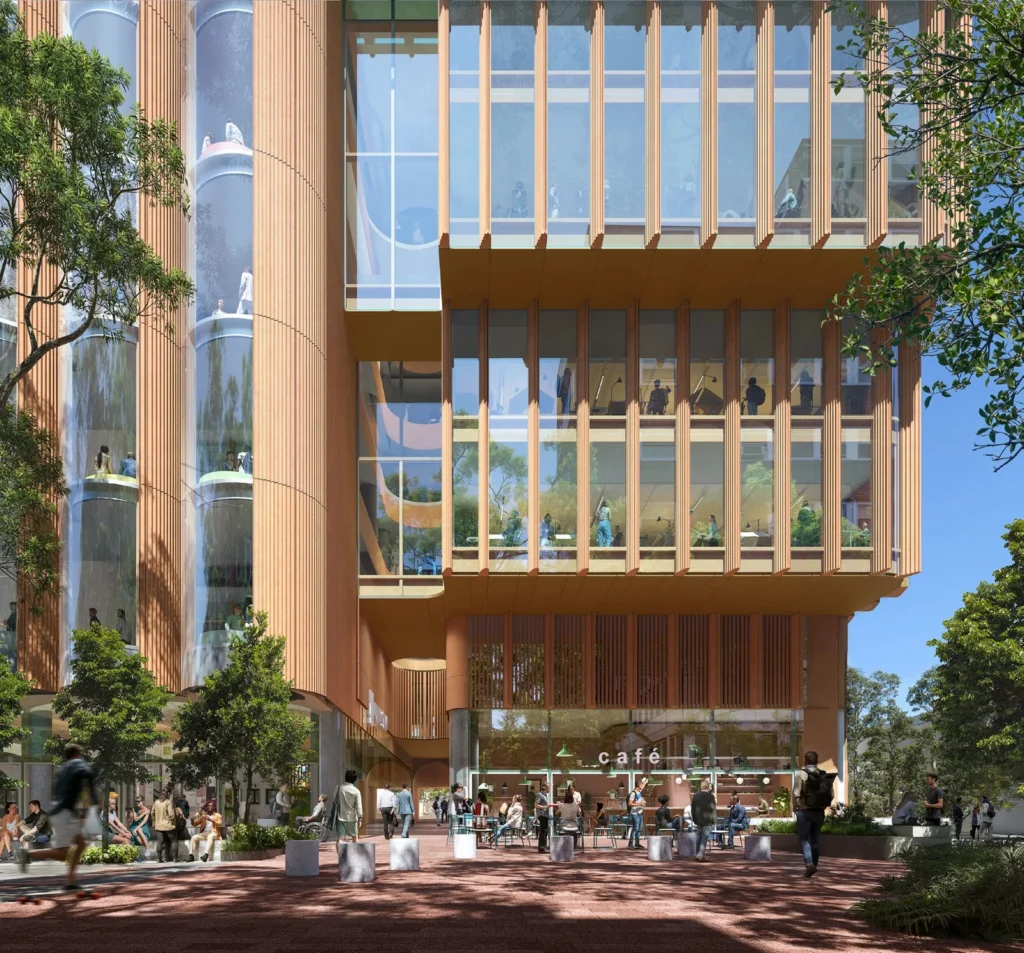
UNSW has secured approval for its second major campus building in recent months, following the approval of the E25 Biolink Building in December 2025. Against this backdrop, Randwick’s health and education precinct continues to evolve, with the NSW Department of Planning, Housing and Infrastructure approving the $162.2 million UNSW G25 Education Building. Acting under delegation from the Minister for Planning and Public Spaces, the department has given UNSW the green light to deliver a significant new teaching and learning facility at its Kensington campus.
Project Overview
UNSW will construct and operate a 13-storey building at 8 High Street, Kensington. The development will replace an existing ground-level car park and provide 19,567sqm of gross floor area. It will accommodate up to 4,174 people, including 3,868 students and 306 employees. The building will include teaching spaces, a ground-floor retail tenancy, end-of-trip amenities, and a through-site pedestrian link.
Although the project does not include new on-site parking, it will offer at least 44 bicycle spaces. The development is expected to create 206 jobs during construction and five ongoing operational roles.
Planning History
UNSW has occupied the site since 1949 and converted it into an at-grade car park in 1978. The land is zoned for educational use and is now earmarked for renewal under UNSW’s $2 billion campus strategy. The proposal supports the broader goals of the Randwick Health and Education Precinct.
The Department declared the project State Significant Development in 2024 due to its purpose and $171 million value. After issuing Secretary’s Environmental Assessment Requirements in August 2024, the Department received the Environmental Impact Statement in March 2025. Although Randwick Council did not provide pre-lodgement advice, the G25 project follows several major campus developments, including the UNSW Health Translation Hub and the B22 student building. UNSW has also sought exemption from local contributions, citing its public benefit and not-for-profit status.
More background on the public exhibition phase is available in our earlier coverage: Public Exhibition Opens for $171m UNSW Campus Development
Design and Architectural Intent
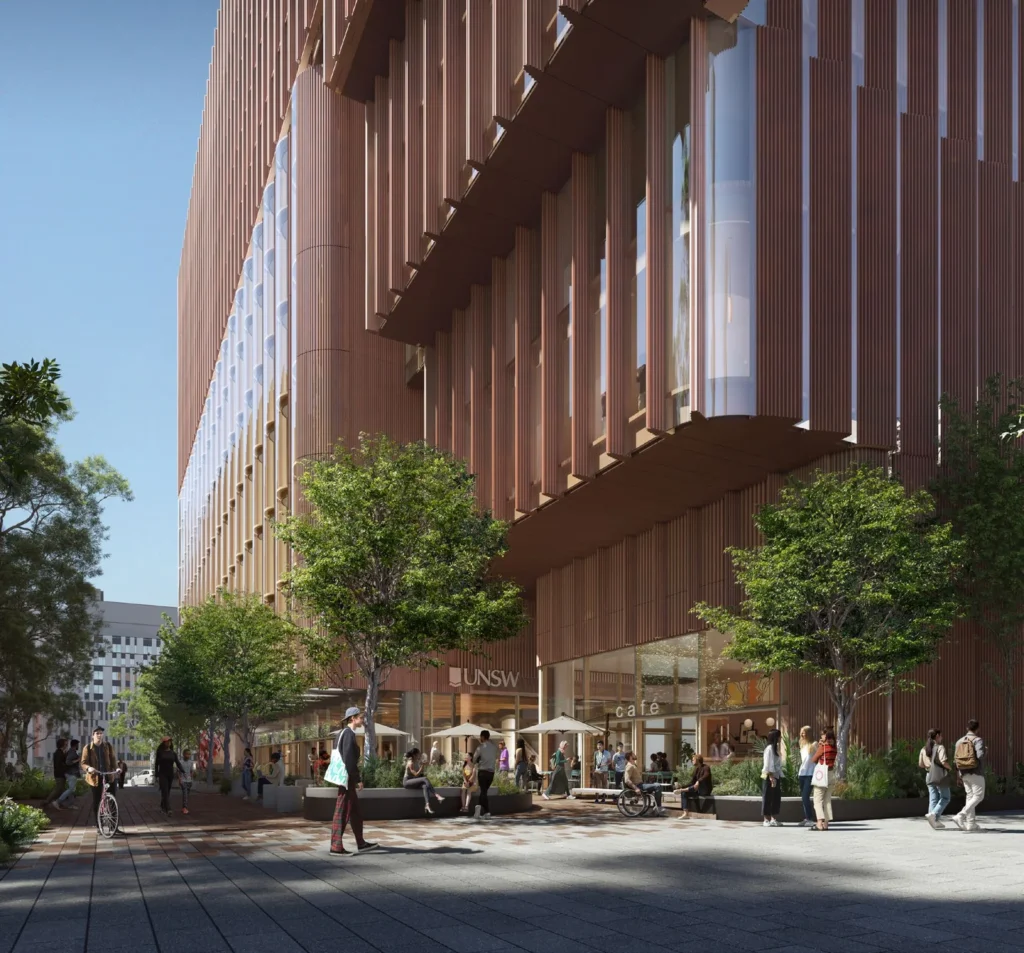
Architectus developed the building design in consultation with the State Design Review Panel. Tiered cantilevered levels and upper-level setbacks aim to minimise overshadowing. The building’s massing transitions campus heights towards the centre, while the northern façade activates Library Walk with articulated materials and a mix of glazed and solid surfaces.
At ground level, the scheme includes a retail tenancy and an outdoor undercroft gathering space. The design targets a 5-Star Green Star certification. It also incorporates solar panels, energy-efficient systems, water-saving features, and sustainable materials.
Community and Stakeholder Response
The public exhibition process received 24 submissions. Of these, 23 were objections, mostly from nearby residents. Common concerns included parking loss, privacy, construction impacts, overshadowing, bulk, traffic, and noise.
Randwick City Council supported the design approach but requested refinements. These included improved wind mitigation, deeper upper-level setbacks, and enhanced landscaping. Council also raised issues around pedestrian links and development contributions. State agencies and utilities did not oppose the project, but recommended conditions relating to water, heritage, and airspace protections.
Impacts and Assessment Findings
The Department reviewed overshadowing impacts on surrounding homes. Although four properties will lose midwinter sunlight for more than three hours, the Department deemed the impacts acceptable. This decision considered existing shading from structures and topography, as well as local rezoning changes.
UNSW addressed privacy concerns by revising internal layouts and limiting rooftop access. Trees along Oval Lane also help screen views. Visual impacts were considered minor due to setbacks and existing vegetation.
UNSW’s transport strategy supports the removal of on-site parking to promote active and public transport. Off-site parking will accommodate construction workers. Other concerns—including noise, vibration, and flooding—will be managed through mitigation measures and emergency planning. The Department found that the design enhances sustainability and improves the public domain.
Determination Outcome and Reasons
The Executive Director of Infrastructure Assessments approved the project with conditions. The Department cited strategic alignment, public benefit, and design improvements as key reasons. Approval conditions require acoustic controls, a construction noise and vibration plan, heritage and flood strategies, and 5-Star Green Star certification.
The Department found that project benefits outweigh the impacts and that the proposal serves the public interest.
Statutory Pathway and Next Steps
The Department assessed the project as State Significant Development under section 4.36 of the Environmental Planning and Assessment Act. The consent includes conditions covering environmental, amenity, and operational matters. Although no modification or appeal pathways were noted, UNSW must submit final design and compliance plans before construction begins.
Project Team
- Developer: University of New South Wales (UNSW)
- Architect: Architectus
- Landscape Architect: Arcadia
- ESD Consultant: Atelier Ten
- Wind, Civil and Structural Engineering: Arup
- Traffic Consultant: JMT Consulting
- Construction Management: AW Edwards
- Acoustic and Vibration: Mott MacDonald, Acoustic Logic
- Geotechnical and Contamination: Douglas Partners
- Heritage and Aboriginal Heritage: Urbis
- Planning and Engagement: Ethos Urban
For more information, search the application number (SSD-74670005) on the NSW Department of Planning, Housing and Infrastructure’s website.
UNSW has also recently secured approval for another major campus project. See our coverage of the E25 Biolink Building approval here: https://urbandigest.com.au/ssd-73456206-unsw-building-e25-biolink-2/