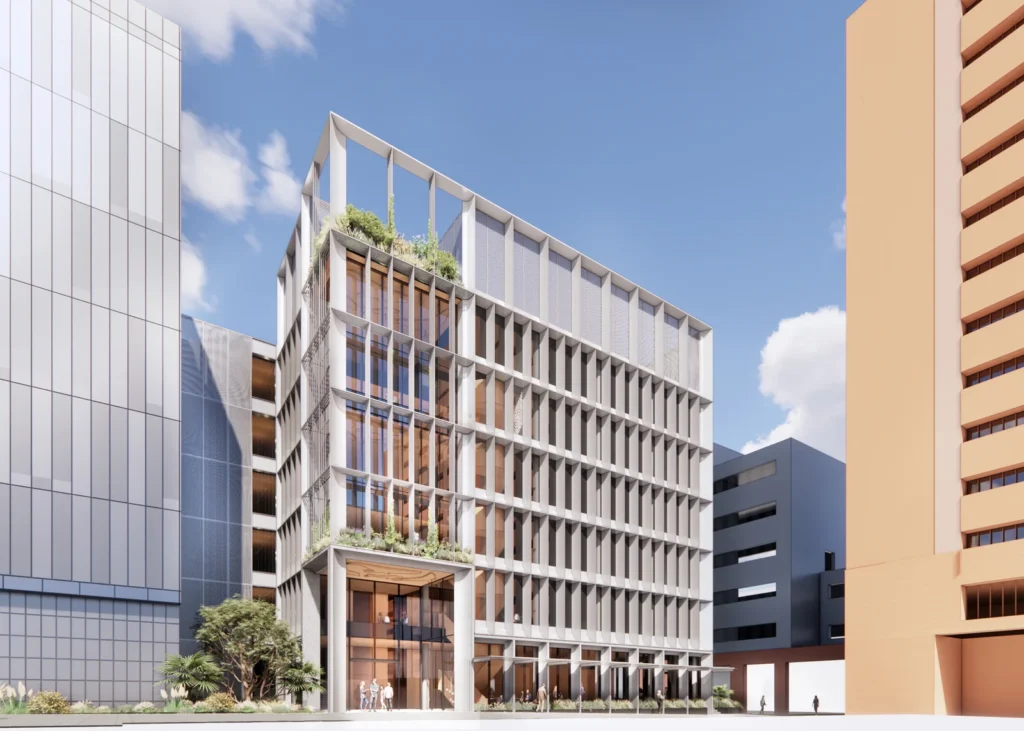
A $52.3 million upgrade and extension of UNSW’s Building E25 Biolink promises to set a new benchmark for campus-based research and teaching infrastructure in Sydney’s Eastern City District, with a design that responds to both flood resilience and contemporary pedagogical needs. The State Significant Development application has now been approved with conditions by the NSW Minister for Planning and Public Spaces, following a detailed assessment by the Department of Planning, Housing and Infrastructure.
Project Overview
The project involves the partial demolition, extension, and comprehensive refurbishment of the existing seven-storey E25 Biolink building at UNSW’s Kensington campus. The scheme delivers 7,620sqm of new gross floor area for teaching, learning, and research, including laboratory spaces, with a maximum building height of 32.89m (RL 86.35). No new car parking is proposed, and the project introduces 50sqm of new canopy landscaping. The capital investment value is $52.3 million, with an estimated 184 construction jobs generated. The building will operate 24/7, with no increase in campus staff or student numbers as the project consolidates existing functions.
Planning History
Building E25 was constructed in the mid-1970s and has been largely vacant in recent years. In 2015, SSD-6674 approved refurbishment works to E25 and adjacent landscaping, but these were not completed due to changing university requirements and the COVID-19 pandemic. The current application seeks to supersede the uncompleted elements of SSD-6674. No Council pre-lodgement feedback is noted in the documents.
Design and Architectural Intent
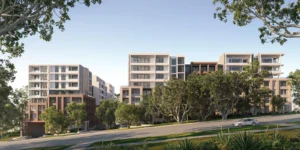
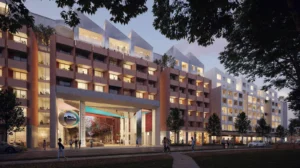
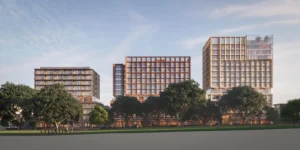
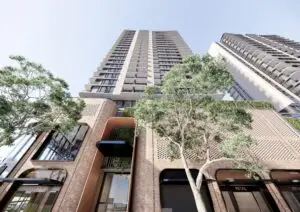
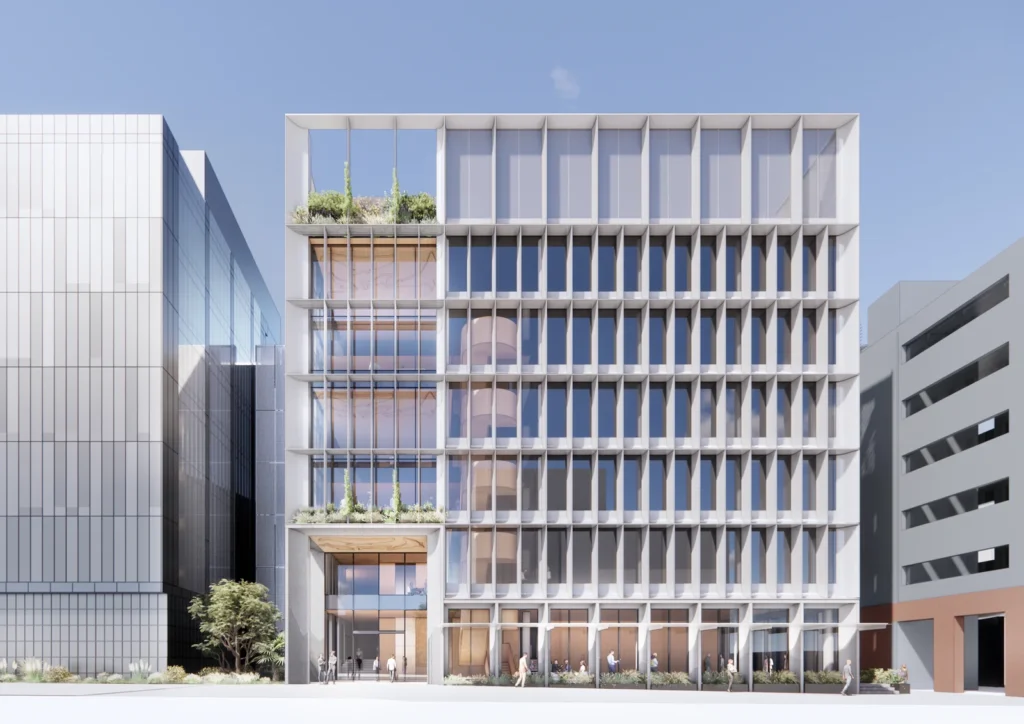
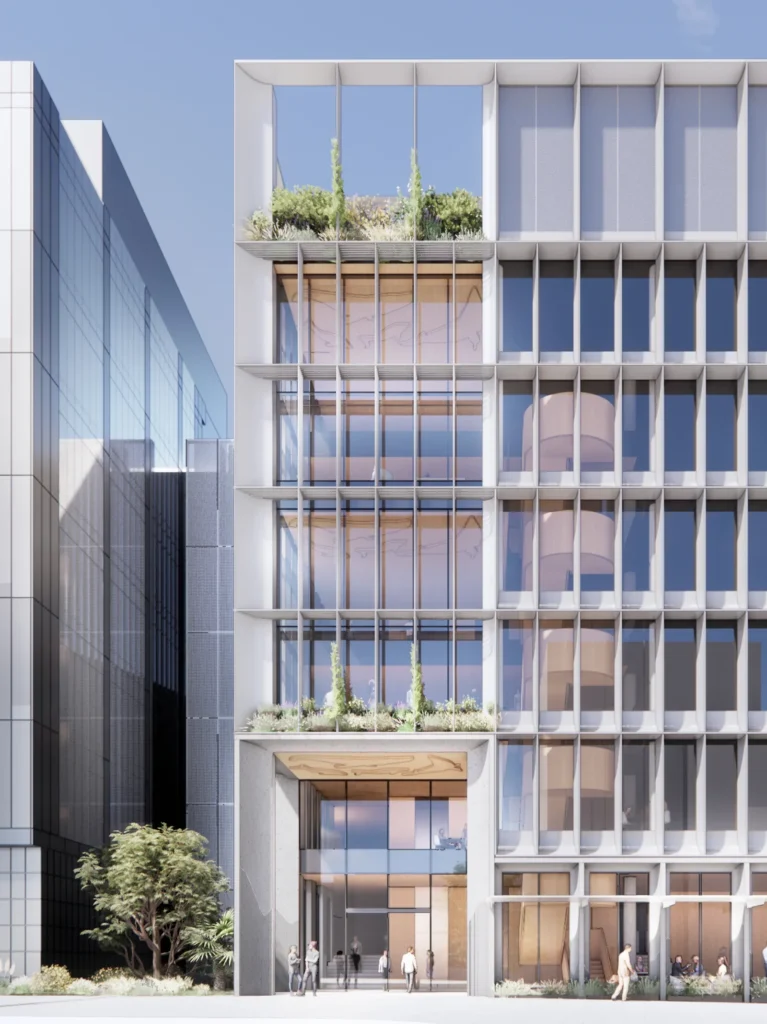
The design, shaped through State Design Review Panel (SDRP) input, retains the existing building shell while extending the western floorplate to align with the adjacent D26 building. The primary western façade addresses Chancellery Walk with high-quality materials—curved sandstone, extruded aluminium, and high-performance glazing—incorporating deep articulation and shading. The scheme introduces a new double-height main entrance and a secondary entrance, both revised to improve legibility and wayfinding. Landscaping is significantly uplifted, with a new pocket gully, outdoor study areas, and upper-level planting, all designed to enhance amenity and support Connecting with Country principles.
Community and Stakeholder Response
No public submissions were received during exhibition. Randwick City Council raised concerns about cumulative parking and traffic impacts from concurrent campus projects, inconsistencies with the campus masterplan, and the adequacy of landscaping and public domain upgrades. Council supported the building’s bulk, scale, façade, and ESD targets but recommended increased landscaping and collaboration on active transport. Eight government agencies provided advice. NSW SES and the Department of Climate Change, Energy, the Environment and Water focused on flood emergency response and shelter-in-place strategy. TfNSW required a Road Occupancy Licence for construction impacts. Heritage NSW sought conditions for Aboriginal heritage management. No objections were raised by agencies regarding bulk, scale, or traffic.
Impacts and Assessment Findings
The Department’s merit-based assessment found the building’s height and massing sympathetic to its context, with no significant view or overshadowing impacts. The SDRP and Council supported the architectural approach and façade materials. Landscaping was considered a substantial improvement, despite site constraints. Traffic and parking impacts were deemed acceptable, with no increase in operational demand and a demonstrated campus-wide shift to public and active transport. Construction worker parking will be managed through on-campus and off-site arrangements, subject to conditions. Flooding was a key issue: the building is designed above Council’s flood planning level, with shelter-in-place arrangements endorsed by NSW SES and robust flood immunity measures. Noise and vibration impacts are manageable with standard mitigation. No biodiversity impacts were identified, and a BDAR waiver was granted.
Determination Outcome and Reasons
The project was approved with conditions by the Minister’s delegate. Decisive factors included the project’s consistency with strategic policy, the acceptability of built form and amenity impacts, and the comprehensive flood risk management strategy. Key conditions require implementation of a Construction Noise and Vibration Management Plan, compliance with shelter-in-place flood emergency protocols, and delivery of landscaping as proposed. The Department concluded that the benefits—expanded educational facilities, improved campus amenity, and economic stimulus—outweigh the manageable impacts.
Project Team
- Developer: University of New South Wales
- Architect: HDR
- Planning Consultant: Urbis
- ESD Consultant: Cundall
- Civil Engineer: Northrop Consulting Engineers
- Aboriginal Cultural Consultant / Connecting with Country Advisor: Yerrabingin
- Acoustic Consultant: Acoustic Logic
- Fire Safety Engineer: Core Consultants
- Traffic Consultant: Arup
- Landscape Architect: Turf Design Studio
- Access Consultant: Morris Goding Accessibility Consulting
- Waste Consultant: Arup
- Contamination & Site Investigation: Douglas Partners
- Aviation Consultant: Avlaw Aviation Consulting
- Water & Flooding Consultant: J Wyndham Prince
- Wind Assessment: Vipac Engineers & Scientists
For more information, search the application number (SSD-73456206) on the NSW Department of Planning, Housing and Infrastructure’s website.