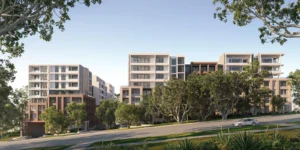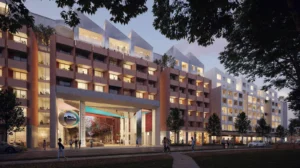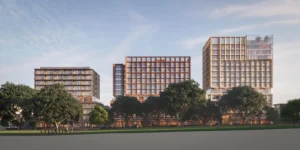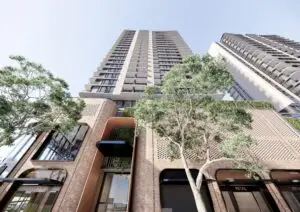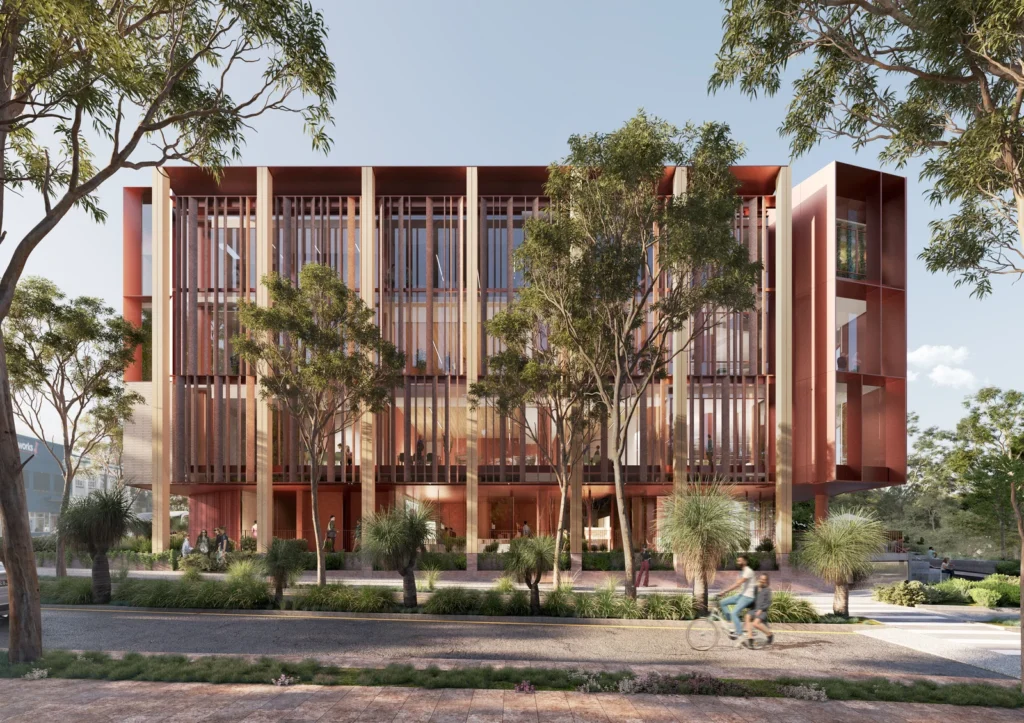
Anchoring a key gateway to the University of Sydney’s Camperdown campus, the $70 million Ross Street Teaching and Learning Hub is set to reshape the precinct’s educational and public domain landscape. The State Significant Development application has now been approved with conditions by the NSW Department of Planning, Housing and Infrastructure, acting under delegation from the Minister for Planning and Public Spaces.
Project Overview
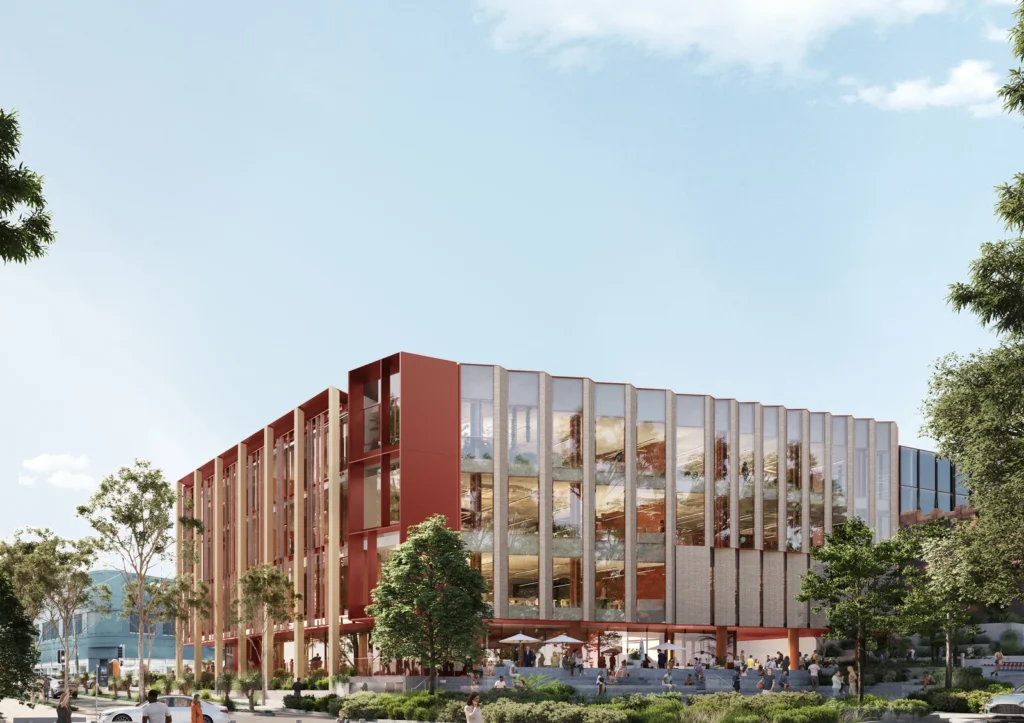
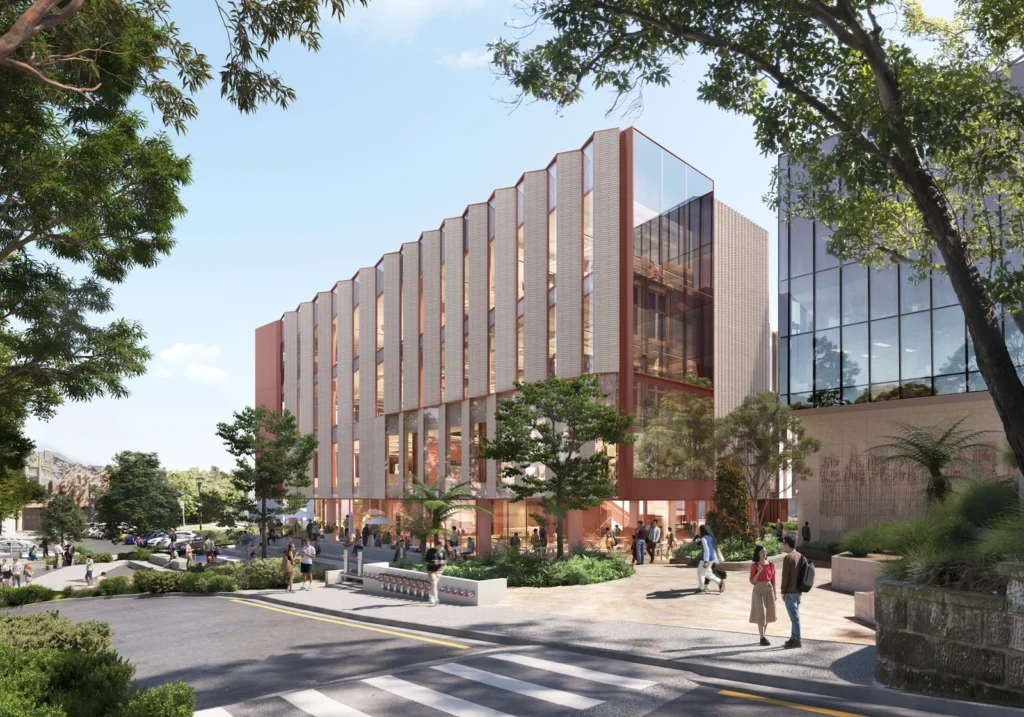
The project comprises a new five-level, multi-disciplinary teaching building accommodating up to 1,500 students and 30 staff, with a gross floor area of 6,913sqm and a maximum height of 20 metres (RL43.5). The scheme includes extensive landscaping, a new public plaza, removal and replacement of 22 trees, and the relocation of heritage sandstone gates. No car parking is provided, and the ground floor will feature food and drink premises. The estimated development cost is $70,197,624, with construction scheduled from June 2026 to June 2028, generating 93 construction jobs and up to 10 ongoing operational roles.
Planning History
The site forms part of the University’s Campus Improvement Program (CIP) concept proposal (SSD-6123), approved in 2015 and subsequently modified. The CIP established building envelopes and design principles for new campus development, including the Life Sciences Precinct, within which the Hub is located. The current application is a detailed stage within this framework. Council pre-lodgement feedback is not specifically mentioned in the documents.
Design and Architectural Intent
A competitive design process, overseen by the University’s Design Excellence Review Committee and endorsed by the Government Architect NSW, selected BVN as the project architect. The building’s contemporary form sits wholly within the approved envelope, employing massing strategies to maximise solar access, pedestrian permeability, and public domain activation. The design integrates a colonnaded entry, extensive native landscaping, and a 34% tree canopy cover, aiming for a 5-Star Green Star certification through passive design, electrification, and water-sensitive urban design.
Community and Stakeholder Response
Public exhibition yielded two submissions—one in support and one providing comment—highlighting the need for high-quality learning spaces and improved bus stop amenity. The City of Sydney Council supported aspects of the scheme but raised concerns regarding heritage impacts from fence removal, blank northern elevation, wind comfort, waste room size, and the adequacy of bicycle facilities. Key agencies, including Heritage NSW and Transport for NSW, focused on heritage fabric retention, cumulative visual impacts, pedestrian safety, and flood risk management. Flooding, heritage, and development contributions were recurring themes in agency and Council feedback.
Impacts and Assessment Findings
The Department found the built form consistent with the CIP envelope and design excellence requirements. The revised scheme retains the majority of the heritage palisade fence along Parramatta Road, limiting removal to three discrete openings, which Heritage NSW deemed acceptable subject to further detail on fence posts. Flood risk was assessed as low, with all building entries above the probable maximum flood level and emergency management strategies in place. The landscape plan offsets tree removal with increased canopy cover. No car parking is provided, supporting mode shift to public and active transport, and a Green Travel Plan is mandated. Waste room and public domain refinements addressed Council’s concerns. The Department determined that impacts on heritage, flooding, and traffic are manageable with recommended conditions.
Determination Outcome and Reasons
The application was approved with conditions by the Department’s Director, Social Infrastructure Assessments. Decisive factors included the project’s consistency with strategic policy, its alignment with the approved CIP envelope, and the applicant’s amendments to address heritage and flooding concerns. Key conditions require Heritage NSW endorsement of new fence post designs, implementation of a Green Travel Plan, final construction traffic management plans, and staff/student induction on local flood hazards. No development contributions were levied, consistent with Planning Circular D6 for Crown developments.
Project Team
- Developer: The University of Sydney
- Architect: BVN
- Landscape Architect: Oculus
- Engineering Consultants:
- Mechanical Services: LCI Consultants
- Civil Engineering: Robert Bird Group
- Design Excellence Review Committee (DERC) included:
- Indigenous Landscape Consultant: Wildflower Gardens for Good
- Security and CPTED Consultant: Lote Consulting
- Arboricultural Consultant: Tree IQ
For more information, search the application number (SSD-57838709) on the NSW Department of Planning, Housing and Infrastructure’s website.