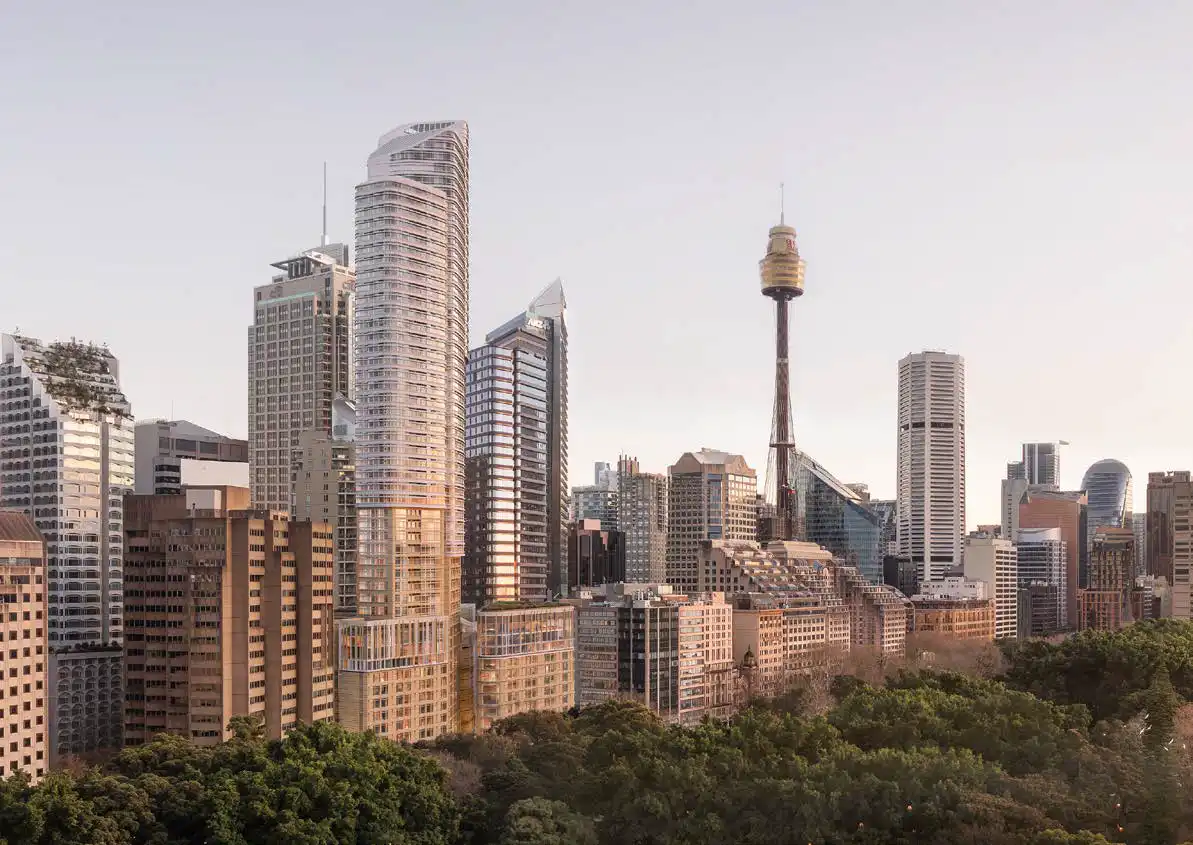
A landmark development on the edge of Hyde Park has secured the green light, marking a major transformation in Sydney’s central business district. Charter Hall’s $925 million project at 201 Elizabeth Street will introduce a new architectural statement on a site long occupied by a 1970s-era commercial tower. The redevelopment forms part of a broader shift in the city’s planning strategy—one that prioritises design excellence, public access, and alignment with major transport infrastructure.
The Proposal
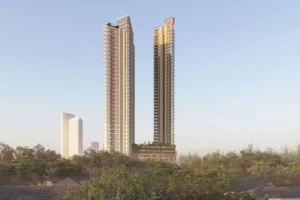
The approved development will deliver a 55-storey mixed-use tower that combines residential, hotel, and retail components. The building will comprise 264 apartments and a 441-room luxury hotel, all situated above a five-level basement that includes 271 car parking spaces, end-of-trip facilities, and loading docks. On the ground floor, over 1,000 square metres of retail space will activate the street frontages.
A defining feature of the proposal is its emphasis on public access and urban connectivity. Two 24-hour through-site pedestrian links will traverse the site: one diagonally from Park to Castlereagh Street, and another connecting Bathurst and Elizabeth Streets along the southern boundary. A new porte-cochere on Castlereagh Street and reconfigured open spaces will enhance ground-level permeability and pedestrian experience. In total, the tower will provide 57,763 square metres of gross floor area.
What It Replaces
The development will replace a 38-storey commercial office tower completed in the 1970s. While prominent, the existing structure has aged considerably and lacks the environmental performance standards expected of modern city buildings. The site currently includes a lower-level plaza and internal link to Museum Station, but suffers from limited street-level engagement and constrained pedestrian movement.
Over time, the building has become less compatible with strategic planning goals for the city’s core, which increasingly favour active street edges, mixed-use density, and integration with transit-oriented development. The decision to redevelop the site follows years of analysis under the NSW planning system, culminating in this State Significant Development approval.
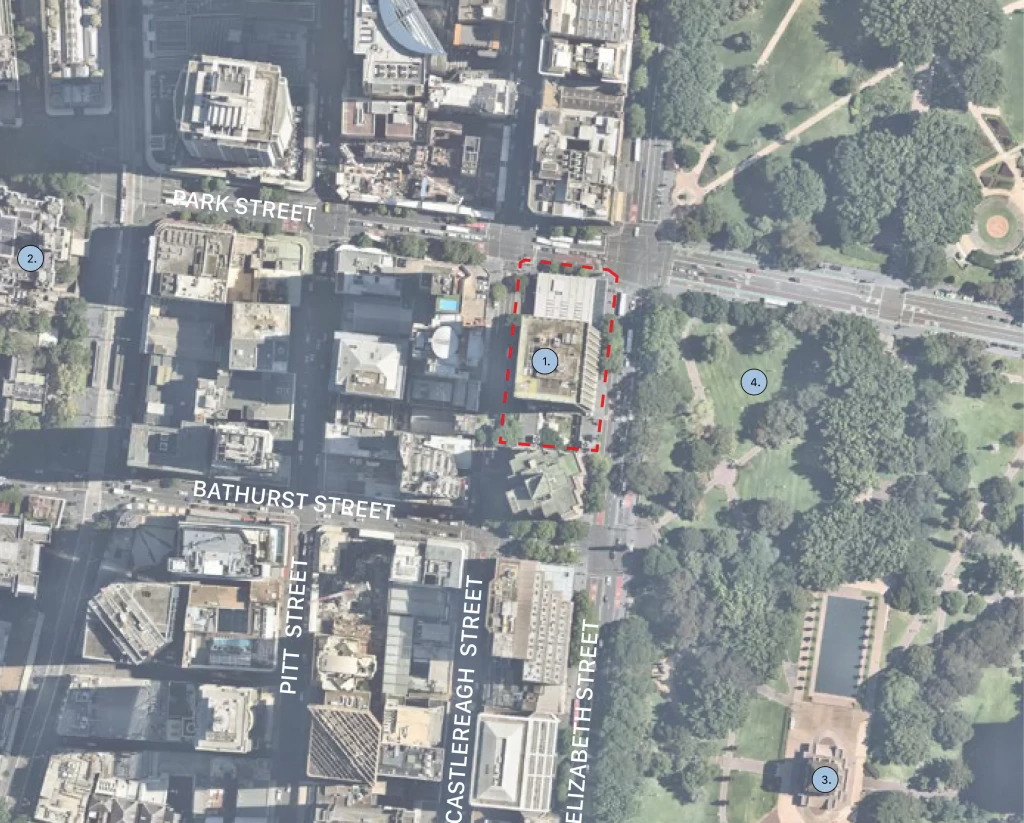
Site location by FJC
City Gateway and Design Excellence
Occupying approximately 70% of a city block, the site borders Park, Elizabeth, Castlereagh and Bathurst Streets. Its strategic location beside Hyde Park gives it prominence as a visual and pedestrian gateway to the eastern edge of the Sydney CBD.
The proposal follows a two-stage planning process. The City of Sydney approved a concept development application in 2018, establishing the building envelope and development framework. Charter Hall then held an invited architectural design competition. An expert jury selected FJMT (now FJC) for their sculptural tower scheme.
The competition featured entries from leading architectural teams, including Zaha Hadid Architects, SJB, 3XN, Simpson Haugh with Buchan, and Scott Carver with Henning Larsen. The jury, which included representatives from the City of Sydney and the Government Architect NSW, selected FJC’s design for its elegant tri-partite tower form, strong relationship between podium and tower, and ability to reduce overshadowing impacts.
To deliver the design, Charter Hall submitted a concurrent modification to the concept approval. This modification requested minor protrusions and a height increase from RL 198.22 to RL 208.6. The jury endorsed these changes because they delivered public benefits, including reduced overshadowing.
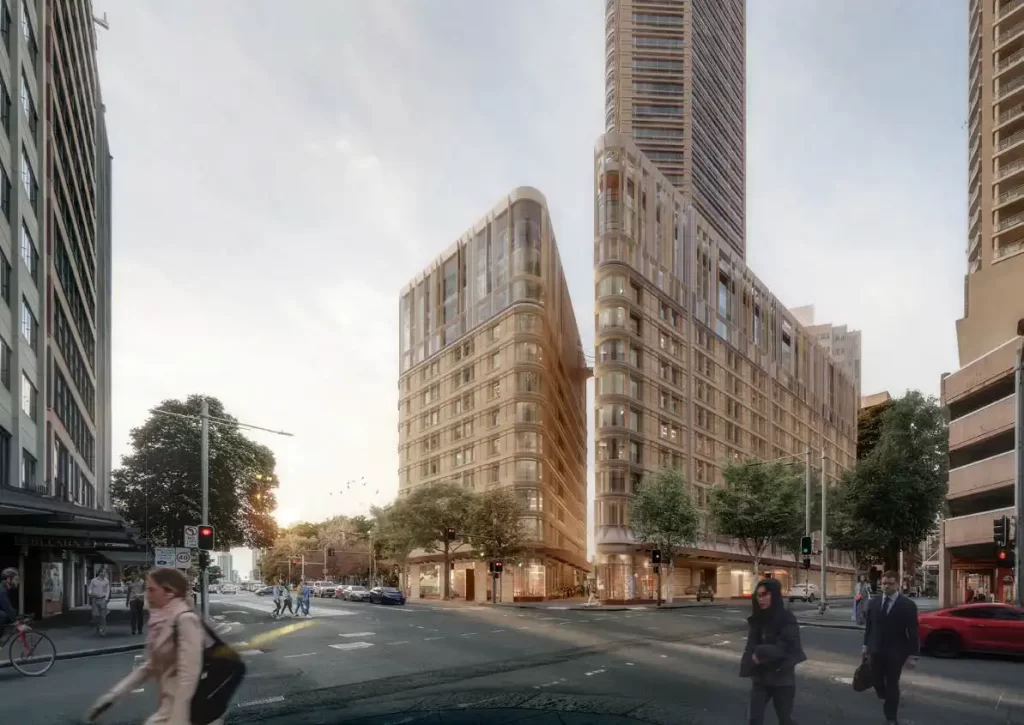
Artist impression by FJC
Shadow and View Impacts Addressed
Overshadowing of Hyde Park and the Anzac Memorial steps emerged as a central issue. The existing tower shades the memorial on Anzac Day. In contrast, the new design removes this impact entirely. It also achieves a 51.4% reduction in overshadowing of Hyde Park between 12pm and 2pm on 21 June.
Assessments found that the proposal would not significantly affect private views beyond what the previous approval allowed. Moreover, the design retains public view corridors to St Georges Church and introduces new diagonal sightlines from Park to Elizabeth Street.
Community Engagement and Response
Charter Hall consulted surrounding owners, community groups, and key stakeholders such as St Mary’s Cathedral, the Anzac Memorial Trustees and Sydney Metro. This engagement helped shape responses to issues like traffic, visual impacts, and public access. The design team specifically addressed overshadowing, a key community concern, through design refinements.
The project also aligns with evolving planning priorities. It integrates private development with public infrastructure by offering through-site pedestrian access, high-quality visitor accommodation, and proximity to the Gadigal Metro Station.
Sustainability and Demolition Strategy
The design targets a 5 Star Green Star Buildings v1 rating. It features fully electrified building services and uses passive design to reduce reliance on mechanical systems. In addition, the project will recycle more than 80% of construction and demolition waste, including concrete and steel.
Charter Hall reported that the hotel component alone has an estimated development cost of $348 million. As a result, the NSW Government classified the proposal as State Significant Development. The project is expected to create 884 construction jobs and employ 310 people once operational.
Project Team
- Developer: Charter Hall Holdings Pty Limited
- Architect: FJC (formerly FJMT)
- Planner: Ethos Urban
- Landscape Architect: FJC
- Sustainability Consultant: WSP
- Traffic Consultant: Stantec
- Structural and Civil Engineer: TTW
- Hotel Operator: Tuscan (Plan of Management)
- Community & CPTED Consultant: Umwelt
- Heritage Consultant: Urbis
- Geotechnical & Contamination: Douglas Partners
- Waste Consultant: Waste Audit
- Connecting with Country: Bangawarra
For more information, search the application number SSD-64090972 on the NSW Department of Planning’s website.