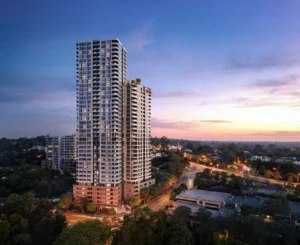
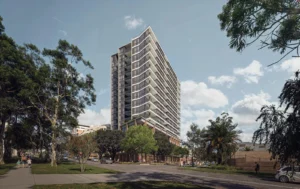
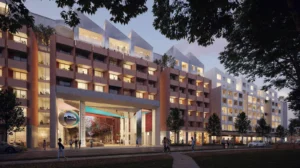
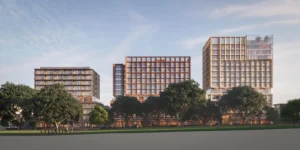
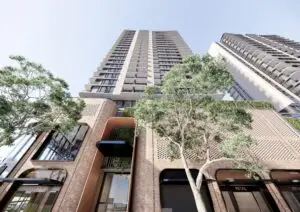
A major build-to-rent (BTR) development has been approved for 39 Delhi Road, North Ryde, marking the next stage in the transformation of the Triniti Business Campus. The project, known as Triniti Stage 2, will deliver 510 rental apartments across three mixed-use buildings and is one of the latest large-scale residential additions to the Macquarie Park precinct.
A Major Step for North Ryde: 510 New Build-to-Rent Homes
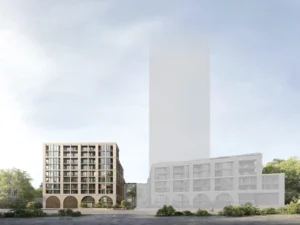
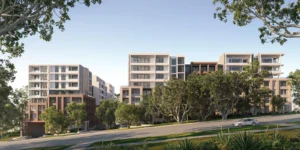
Backed by Stockland Development Pty Ltd, the proposal comprises three buildings ranging from 9 to 20 storeys. It will include 1,631 square metres of retail and commercial space on the ground floor, and 1,703 square metres of communal residential amenity. The apartments—purpose-built for the rental market—will be managed under a single ownership structure, offering longer-term leases and on-site services.
The project forms part of a growing pipeline of BTR housing across Sydney. It is supported by state and national housing policies aimed at boosting supply and improving affordability. Therefore, Triniti Stage 2 aligns with the NSW Government’s targets under the Housing 2041 strategy and the National Housing Accord.
Why Build-to-Rent in Macquarie Park?
Located just 150 metres from North Ryde Metro Station, the site offers strong public transport access and integration with employment hubs. The proposal supports transit-oriented development principles. Consequently, it is consistent with the Macquarie Park Place Strategy’s vision for high-density mixed-use redevelopment.
The site itself is a long-vacant parcel adjacent to the existing Triniti Business Park. It is located on the southern portion of the Triniti Business Campus, legally described as Lot 21 in DP 1003588. The land was previously approved for commercial development under consent LDA950/2007 but remained undeveloped.
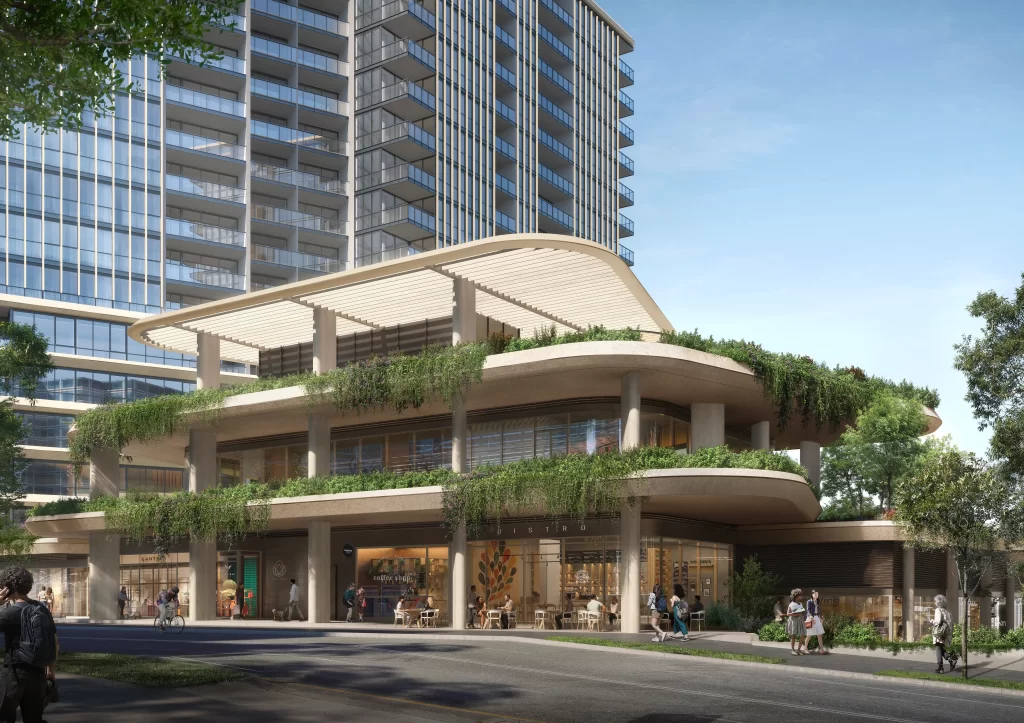
Artist impression by Koichi Takada Architects
Planning Framework & Compliance
The application was lodged in September 2023 and assessed under Clause 6.9 of the Ryde LEP 2014, which was in effect at the time. Although this clause was later repealed by the Macquarie Park Transport Oriented Development Precinct SEPP, the proposal retained assessment rights under the savings provisions.
The project sought and secured floor space ratio and height incentives in return for public benefits, including open space and pedestrian links. A Voluntary Planning Agreement (VPA) with the City of Ryde Council ensures the dedication of public access through New Link Road and the payment of $9.4 million in development contributions.
Community Reaction and Council Concerns
During public exhibition, the application attracted 125 submissions. These included objections from the City of Ryde. Concerns focused on building bulk, overshadowing, visual and traffic impacts, and ecological disruption. In response, the applicant made significant design amendments.
The Independent Planning Commission (IPC) took over as consent authority due to the volume of objections. In July 2025, the IPC approved the project following extensive consultation and design revision.
Design Revisions in Response to Feedback
In response to feedback, the design was amended to improve solar access, increase greenery, and enhance public realm integration. Notable changes include:
- Relocating building mass from Building C to Building B to reduce overshadowing.
- Increasing deep soil zones from 7% to 16%.
- Lifting tree canopy coverage from 18.3% to 25.5%.
- Expanding solar access to adjacent parkland from 21% to 50% at midwinter.
- Adding pedestrian links and widening setbacks to improve site connectivity.
As a result, these refinements helped align the proposal with Clause 6.9 of the Ryde Local Environmental Plan 2014. This allowed the project to utilise bonus floor space and height provisions.

Artist impression by Koichi Takada Architects
IPC Decision and Statutory Context
The IPC found that the project meets all relevant strategic planning objectives. Despite the repeal of Clause 6.9 under a new state planning amendment, the application retained its eligibility due to timing.
Key aspects of the approved development include:
- 510 BTR units: 48 studios, 217 one-beds, 219 two-beds, 26 three-beds.
- 42,084m2 gross floor area (GFA), with 38,750m2 residential, 1,703m2 amenity, 1,631m2 retail.
- 155 new car spaces and reuse of 164 existing spaces from Triniti Stage 1.
- 313 bicycle spaces and 5 motorcycle bays.
- 8,098m2 of communal open space, including 5,257m2 publicly accessible areas.
Voluntary Planning Agreement and Developer Contributions
Stockland will contribute $9.4 million under the City of Ryde’s Section 7.11 Plan. In addition, the company has entered into a Voluntary Planning Agreement with Council. This includes the dedication of access rights to New Link Road, a key part of the site’s internal circulation.
These contributions were instrumental in unlocking planning incentives and facilitating approval.
Economic and Employment Outcomes
The project is forecast to generate 400 construction jobs and create 196 permanent roles across retail, building management, and associated services.
In addition to housing supply, Triniti Stage 2 supports local economic activity. It does this through its integration of retail and commercial uses. Therefore, it will help activate the streetscape and improve amenity in the surrounding area.
Lessons for Future Projects
Triniti Stage 2 underscores the value of early agency consultation and design flexibility. Key lessons include the importance of public domain integration, clear response to planning strategy, and proactive engagement with community and council concerns.
The proposal highlights how design-based planning controls, such as Clause 6.9, can enable negotiated outcomes. These outcomes can benefit both the developer and the public.
Project Team
- Developer: Stockland Development Pty Ltd
- Architect: Koichi Takada Architects
- Planner: Ethos Urban
- Landscape Architect: Square 1 Landscape Architects
- Traffic & Transport: Colston Budd Rogers & Kafes
- ESD and Hydraulics: LCI Consultants
- Structural/Civil/Stormwater/Flooding: Northrop
- Wind: Windtech
- Noise: Acoustic Logic
- Visual Impact & CPTED: Ethos Urban, Harris
- Access Consultant: Morris Goding Access Consulting
- BCA: Steve Watson & Partners
- Waste: TTM
- Arborist: Urban Arbor
- Heritage: Urbis
- Quantity Surveyor: Rider Levett Bucknall
For more information, search the application number (SSD-55844212) on the NSW Department of Planning, Housing and Infrastructure’s website.