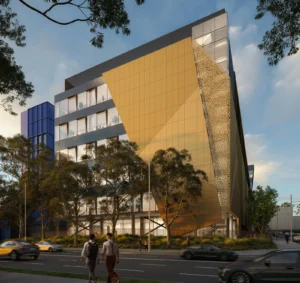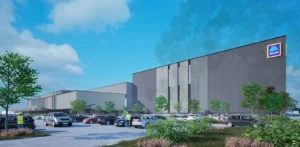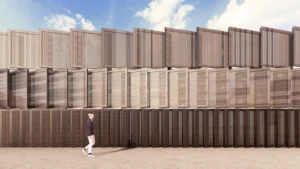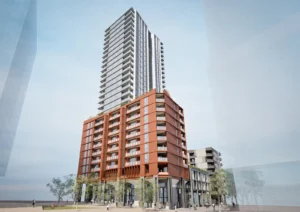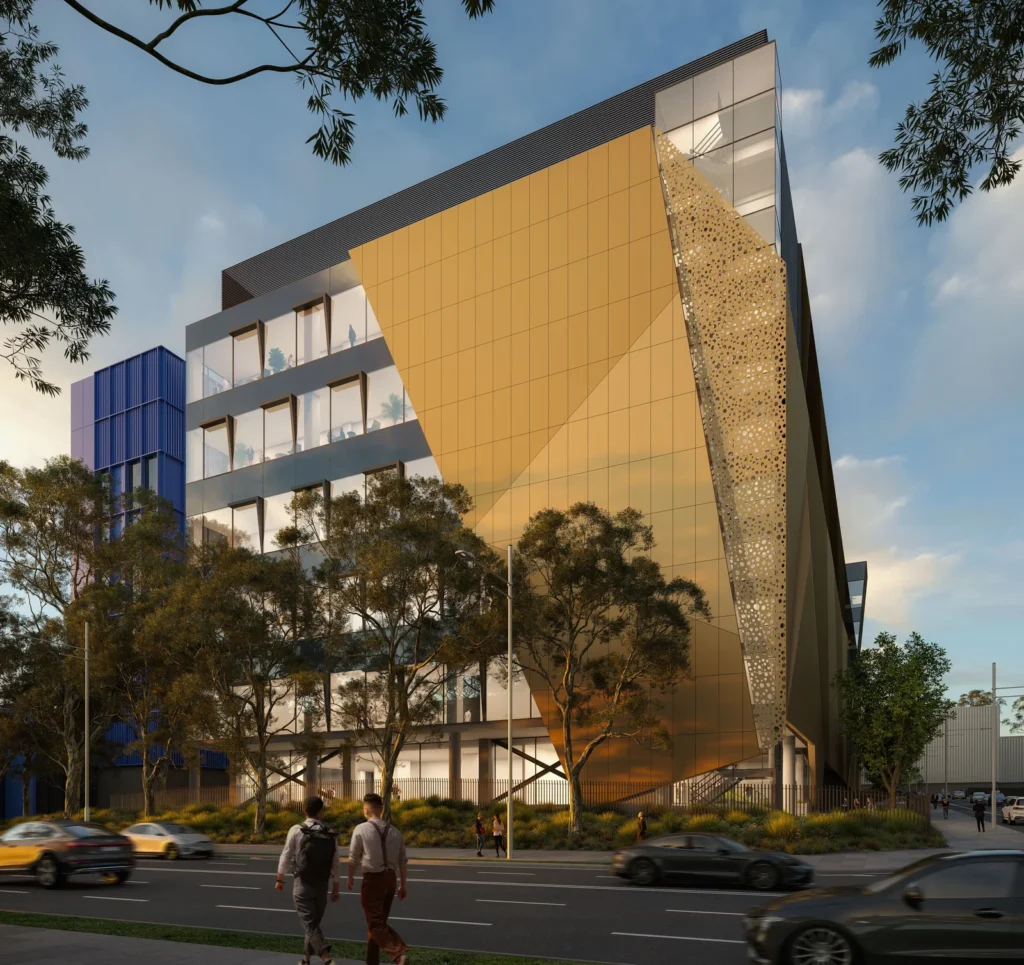
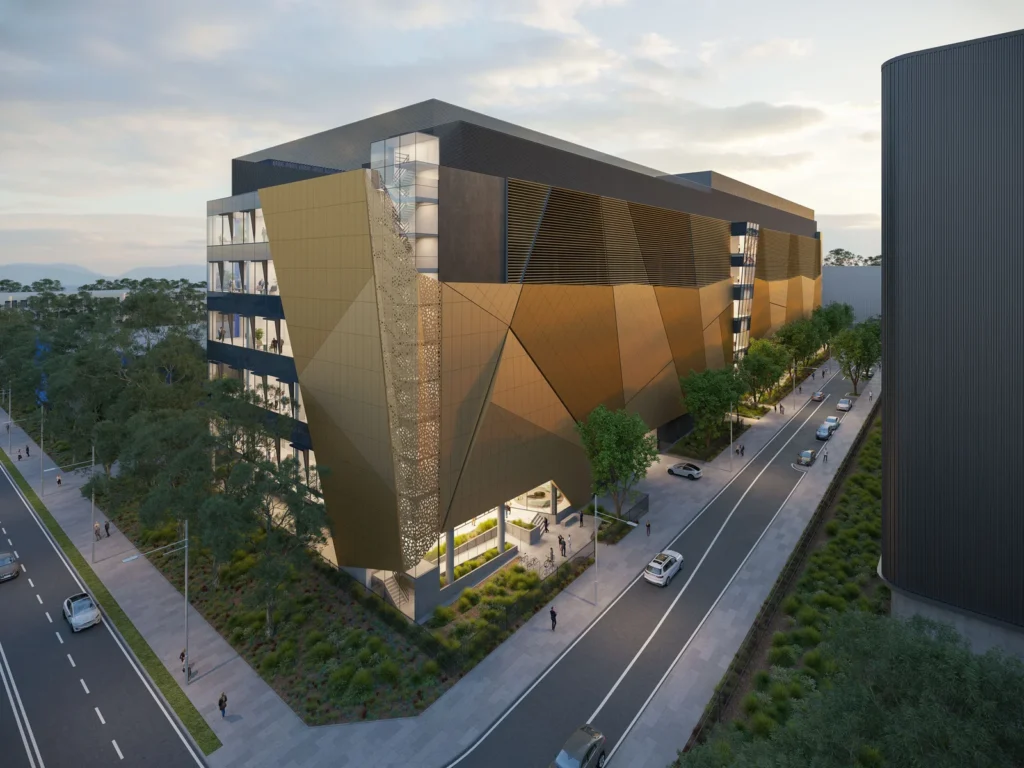
Stockland has secured approval for a 76.4 MW data centre at 1-5 Khartoum Road, Macquarie Park, after the NSW Department of Planning, Housing and Infrastructure found the project’s key noise, air quality and urban design impacts could be managed through conditions of consent. The State significant development will replace an existing two-storey car park on a 10,015sqm site with a six-storey facility containing 24 data halls, ancillary office space and supporting infrastructure.
Project overview
Proposed by Stockland Development Pty Ltd, the project has an estimated development cost of $718.26 million. It includes 19,434sqm of gross floor area, a maximum height of 45 metres, 28 back-up diesel generators, lithium-ion battery storage, a 33kV switching station and 25 car parking spaces within the building footprint. Construction is expected to take 33 months and generate up to 250 full-time equivalent construction jobs, while the completed facility is expected to support 50 operational jobs.
The site sits within the Macquarie Park business precinct and is currently used as a car park. It is surrounded by existing and approved data centre development, including the Macquarie Park Data Centre to the west and the Talavera Road Data Centre Campus to the east. In addition, a separate Stockland data centre proposal immediately south of the site, known as Khartoum Road Data Centre Building H, remains under assessment.
Why Macquarie Park
The Department’s assessment found the proposal aligns with strategic planning policies that support investment in knowledge-intensive jobs and economic productivity in Macquarie Park. It pointed to consistency with the Greater Sydney Region Plan, the North District Plan and the City of Ryde’s Local Strategic Planning Statement. Meanwhile, the applicant argued the site was suitable because of its proximity to other data centres, access to power and utilities, public transport connections and links to nearby industry and Macquarie University.
The assessment report also placed the project in the context of rising demand for digital infrastructure across New South Wales. It notes data centres now support cloud computing, artificial intelligence, machine learning and real-time analytics, and therefore require sites that can accommodate large-scale technical infrastructure.
Design and site layout
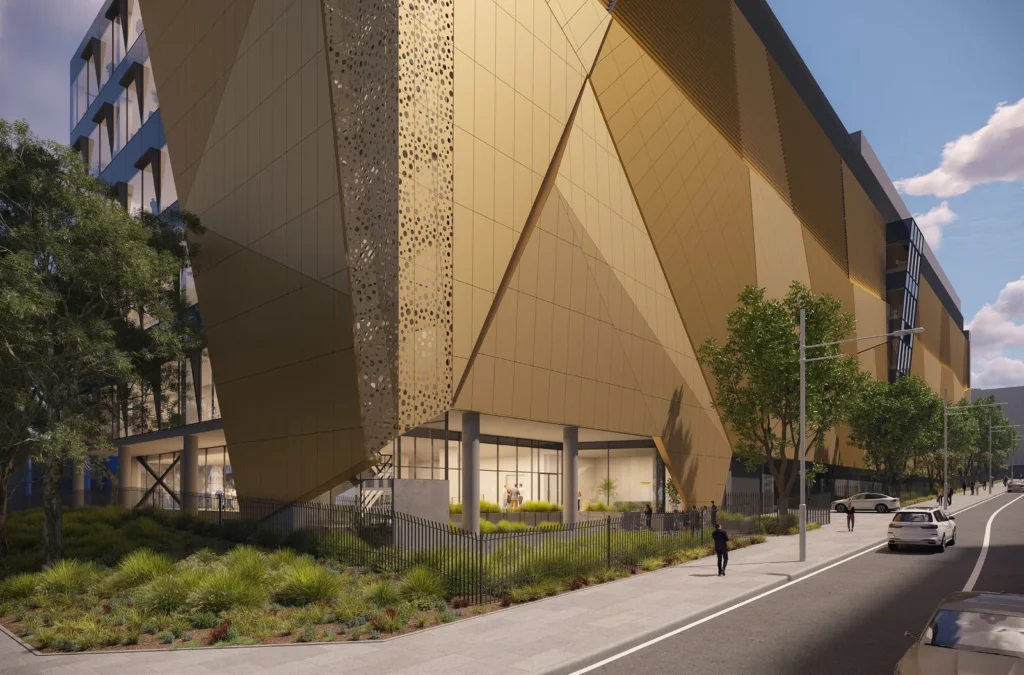
The approved building presents as a six-storey structure with a rectangular footprint addressing both Talavera Road and Murrell Street. The design includes a 10.19-metre setback to Talavera Road and a 7.08-metre setback to Murrell Street, with landscaping, driveway access and pedestrian egress integrated into the frontage treatment. The ground floor includes office space facing Talavera Road, internal parking, loading, storage, fuel storage and water tanks. Levels 1 to 3 contain the data halls, while levels 4 and 5 accommodate generators, battery storage and associated electrical infrastructure.
The proposal also involves substantial site works. These include demolition of the existing two-storey car park, a net cut of 22,600 cubic metres, removal of 64 trees, retention of 15 trees and delivery of 1,070sqm of deep soil landscaping.
Community response and agency feedback
The Department exhibited the application and environmental impact statement from 6 March 2025 to 2 April 2025. It received three public submissions, including one from a special interest group and two from individuals. It also received a submission from City of Ryde Council, advice from six government authorities and state-owned corporations, and one submission from a utility provider.
Public objections focused on the project’s proximity to residential areas, as well as noise, air quality, visual bulk and energy use. Council did not object to the project overall, but raised concerns about the location of car parking, security fencing, landscaping, flooding, civil engineering and environmental health matters. Meanwhile, agencies including the EPA and the Department of Climate Change, Energy, the Environment and Water raised technical issues that were addressed during the assessment process.
Key assessment issues
Noise, air quality, and design and visual impacts were the central assessment issues. The Department found construction noise could be managed through standard construction hours and a site-specific Construction Noise and Vibration Management Plan. It also found the project’s operational noise modelling demonstrated compliance with project noise trigger levels at all assessed receivers, provided the applicant limits generator testing, applies acoustic treatment to external plant and equipment, and maintains the sound power levels assumed in the modelling.
Air quality received closer scrutiny because of the diesel back-up system. The Department said the applicant’s initial modelling predicted nitrogen dioxide exceedances at three future adjoining residential receivers during generator testing. However, further computational fluid dynamics modelling and additional mitigation measures, including best practice equipment, demonstrated compliance with the relevant criteria. Although conservative modelling of an extended emergency outage scenario identified possible exceedances, the Department considered the likelihood of such an event to be extremely low.
On urban design, the Department concluded the building’s size and scale would not be out of place in the evolving character of the precinct. It found the project responded appropriately to surrounding commercial and data centre development, particularly because of its setbacks, landscaping and façade treatment.
Traffic impacts were also assessed as acceptable. The project would access the site from Murrell Street and provide 25 parking spaces within the building. The site is currently used as a larger car parking facility, so the Department did not identify unacceptable operational traffic impacts in the approved scheme.
Determination and conditions
The Department recommended approval, and the determination was adopted on 11 March 2026 by the A/Director, Industry Assessments, acting as delegate of the Minister. In its evaluation, the Department said the project would add data storage capacity in Greater Sydney, support employment in the Ryde LGA and deliver substantial investment in an established commercial enterprise area. It concluded the project was in the public interest and could proceed subject to conditions.
Those conditions focus on the issues that dominated the assessment. They require noise verification reporting, an Air Quality Management Plan, annual emissions testing and reporting, and a power outage notification protocol for neighbours. The consent also requires flood emergency response planning, along with further detail on landscaping and other operational controls.
Statutory pathway
The project was assessed as State significant development because of its scale under the Planning Systems SEPP. The Department’s assessment report notes the application was supported by an environmental impact statement prepared by Urbis on behalf of Stockland, followed by a submissions report and several rounds of additional information during 2025.
Project Team
- Developer: Stockland Development Pty Ltd
- Planning: Urbis
- Architect: Greenbox
- Landscape architect: Arcadia
- Air quality, noise, infrastructure, ESD, hazards, wind and greenhouse gas: ARUP
- Cost consultant: Linesight
- Geotechnical and contamination: Douglas Partners
- Traffic: CBRK
- Flooding: Northrop
- Arboriculture: Birds Tree Consultancy
- Accessibility: Jensen Hughes
- BCA: McKenzie
- Waste: Elephants Foot
- Survey: LTS
For more information, search the application number (SSD-63235720) on the Department of Planning, Housing and Infrastructure’s website.